A few days ago marked the anniversary of the death of Mullah Akhtar Mansour, the second leader of the Taliban. During his leadership, the Taliban seized the city of Kunduz and escalated military operations against former Afghan and foreign military forces. Mansour was an influential leader and networker, even before officially assuming Taliban leadership, he wielded considerable authority. In the absence of any visible action from Mullah Omar, who led a secluded life, and following the imprisonment of Mullah Baradar, the leadership of the Taliban effectively fell into his hands. Mansour is highly respected by the Taliban, and they have named a corps after him. Moreover, his sons have been placed in government positions. The Taliban’s narrative portrays Mullah Akhtar Mansour as an exemplar of righteousness, purity, integrity, and bravery, with no blemish on his character. However, according to some researchers, including Hassan Abbas, a Pakistani-American author who wrote “The Return of the Taliban,” Mansour led a luxurious and extravagant life, had an interest in the company of beautiful women, fully indulged in worldly pleasures, relentlessly pursued wealth accumulation, and exploited every means to do so. It is evident that the Taliban exaggerate the greatness of their leaders and clothe them in the garb of spirituality, piety, and religious devotion to deceive the public.
During the Taliban’s first regime (1996-2001), Mansour played a relatively minor role in the government. He served as the head of security at Kandahar Airfield and later as the Minister of Transportation and Aviation for the Taliban. In his book “The Return of the Taliban,” Hassan Abbas, citing United Nations reports, illustrates that during those years, Mansour was involved in trade and drug trafficking, also holding sway as a shadow ruler in Kandahar. According to Abbas, Mansour made multiple trips to Dubai from 2006 to 2012, including one trip to Bahrain with a Pakistani passport. Abbas cites an American intelligence analyst stating, “The most interesting aspect of Mansour’s famous travels was his trips to Dubai to buy perfume. There, with the royal family’s support, he would relax in the arms of Russian girls.”
Abbas further writes, based on a Pakistani intelligence officer, that Mansour’s relations with the United Arab Emirates date back to the Taliban’s first reign, and this relationship was based on mutual interests. At that time, as the Minister of Aviation for the Taliban, he continuously invited Arab Sheikhs to Afghanistan for falcon hunting. He would travel to the UAE with a private jet and luxury entourage provided by the royal family. Abbas notes that Mansour’s relationship with the Dubai Sheikhs was so amicable that when the National Security Advisor of the United States asked the Emir of Dubai to arrest Mansour, who was residing in Dubai, the Emir refused to comply.
In the end, Hassan Abbas makes an interesting conclusion point: “We often perceive Taliban leaders as cave-dwelling conservatives who shuttle between the mosque and the madrasa, but the narratives emerging from within the Taliban show that the reality is quite different. They are politicians, lovers of wine and women, and still enjoy traveling by private jets. Their titles are not indicative of reality, and they are not spiritual leaders. They engage in the same activities that they condemn their enemies of doing them.”
Dictatorial regimes fabricate lies to sway their supporters, knowing no bounds. The survival of oppressive regimes depends on their ability to persuade people to accept their lies. Vaclav Havel, a Czechoslovakian writer, once said, “Dictatorial regimes are essentially structures built upon pillars of lies. The most powerful weapon of these regimes is lies.” Like other repressive regimes, the Taliban relentlessly propagates propaganda to deceive the masses and strengthen the foundations of their regime, never ceasing for a moment in the indoctrination and repetition of lies. They also try to mythify their leaders and portray them as powerful, exceptional individuals with unique qualities. The Taliban present Mullah Mohammad Omar, the founder of their group, in a bizarre light. Based on this image, Mullah Omar was a charismatic, just, and powerful leader, possessing great knowledge and wisdom, and displaying courage in the face of danger. The fact that during the Taliban’s first rule, when Mullah Omar was at the helm, they did not allow any pictures of their leader to be published was an attempt to sanctify him and enhance his charisma. However, when you look at Mullah Omar’s record objectively and without bias, you find him to be someone who allowed his military commanders to carry out killings and torture of opponents, and during his five-year leadership of the Taliban in Afghanistan, the group spared no crime against the people, launching a policy of scorched earth, subjecting women to various forms of discrimination, and committing extensive acts against Afghan history and culture, turning the country into a paradise for international terrorist organizations. A leader who was praised by his supporters for his bravery, but when international military forces, in collaboration with their internal allies, attacked Kandahar, he fled the battlefield and lived clandestinely for years, almost cutting off ties with Taliban field commanders. He made the foolish decision to support bin Laden, leading Taliban members to be dragged through dust and blood, while he lived in hiding and delegated management to other prominent Taliban members, including Mullah Akhtar Mansour.
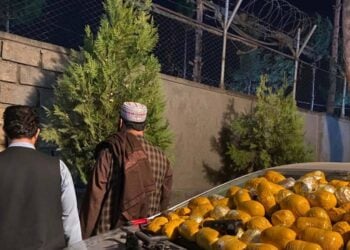
While the Taliban speak of the righteousness and purity of their leaders, some high-ranking members of this group are known as international drug traffickers. Akhtar Mansour was considered one of these individuals. Similarly, Bashar Noorzai, who was released from American prisons as part of a deal, is a well-known drug trafficker on a global scale. When Bashar Noorzai returned to Afghanistan, Taliban leaders welcomed him as a national hero, indicating that his activities were highly valuable and vital to the group. Other Islamic organizations, such as Hezbollah in Lebanon and Ansar Allah in Yemen, are also accused of involvement in drug trafficking. A significant portion of the expenses of these groups are funded through this means.
The Taliban propaganda machine continuously talks about corruption in the previous government and portrays officials of the republic era as hedonistic, extravagant individuals indifferent to the suffering of the people. The reality is that the Taliban do not differ much from the officials of the previous regime in this regard. Perhaps the only difference is that in the previous regime, there were more resources and money, and consequently, there was more embezzlement and corruption. Reports are indicating that Taliban officials are involved in the looting of Afghanistan’s mines. Additionally, multiple reports, including the Cigar Report, have been published regarding the Taliban’s misuse of international aid for the needy. Currently, the Taliban leader in Kandahar spends a huge budget without being accountable to any authority or informing the public about the amount spent. Recently, the Taliban leader announced the budget for the year 1403. Interestingly, no one besides prominent Taliban officials knows the exact amount of this budget or where and how the funds should be spent. During the republic, there were active free media outlets that could freely express themselves and criticize the government’s performance, thereby assisting in transparency. However, under the Taliban regime, no media outlet has the right to operate freely and must adhere to the strict red lines of the Taliban emirate, otherwise they may face severe punishments.
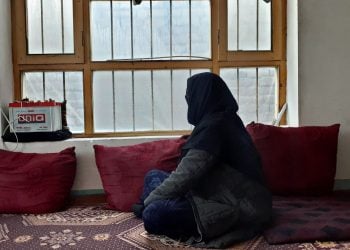
After regaining power, Taliban authorities have engaged in multiple marriages. They lavish extravagant wedding ceremonies using state funds and take second, third, or fourth wives. Exploiting economic desperation, they coerce families into marrying off their underage daughters. Using the barrel of a gun, Taliban members force families to marry off their daughters to them. There are reports of some girls in various parts of the country resorting to suicide to escape forced marriages with the Taliban. Yesterday, the 8 Sobh newspaper reported that the Taliban are creating dozens of religious schools for girls in the Kunduz province, providing a platform for marrying girls to members of the group. Taliban mullahs in these schools mentally groom girls to become second, third, or fourth wives of adult men affiliated with the Taliban. Currently, the Taliban have control over most economic resources, forcing girls from poor families to seek refuge with them for livelihood. If this is not corruption and misuse of state funds and authority, then what is it?
What stands out in Akhtar Mansour’s life is his deep relationship with the Dubai royal family. Mansour is not alone in this regard; the Haqqani network has also had close relations with the leadership of the United Arab Emirates since the 1990s. Allegedly, the UAE’s approach towards some extremist Islamic organizations has been to grant them privileges and, in return, require them to secure its interests within its territory and refrain from terrorist acts against it. It is said that in the 1990s (and perhaps later as well), the UAE reached such an agreement with Al-Qaeda. During the peak years of Al-Qaeda’s terrorist activities, the organization never carried out any destructive operations in UAE territory. The exemplary aspect of this story is that wealthy modern governments sometimes find themselves compelled to pay ransom to criminal gangs or terrorist organizations to remain safe.
You can read the Persian version of this analysis here:
کارنامه ملا اختر منصور؛ قاچاق مواد مخدر، زندهگی لوکس و هماغوشی با دختران روسی | روزنامه ۸صبح