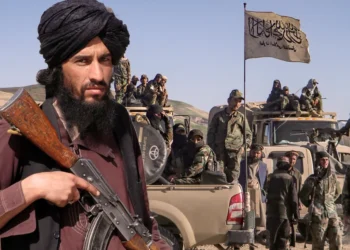
ISIS Khorasan emerged amid heightened Taliban-US negotiations. As these interactions grew, discussions of ISIS and its ensuing acts of terror became more pronounced.
A concerted effort appeared to be underway to cast the Taliban in a more negative light and establish ISIS as the new face of some of humanity’s most horrific crimes – crimes previously ascribed to the Taliban.
The brutal practices of ISIS bore much resemblance to those of the Taliban. Both factions utilized suicide bombings, both beheaded adversaries – journalists, local influencers, civil activists alike – as a method of operation.
Civilian-targeted bombings such as those at stadiums, schools, and hospitals were more frequently associated with ISIS. Nonetheless, such atrocities had been perpetrated long before ISIS’ inception. However, a perception was systematically fostered that painted ISIS as more ruthless than the Taliban, creating an illusion that the ‘bad’ terrorists were now ISIS while the ‘good’ adversaries were engaged in negotiations.
Arguably, disagreements within the Taliban about peace negotiations and the question of continuing warfare or dialogue with the Americans led to the birth of ISIS from the Taliban’s ranks.
Some of these militants transferred their allegiances to a different jihadist cause. This split, however, turned out to be beneficial to the Taliban’s image rehabilitation and their return to power.
In the final years of the republic government ofAfghanistan, particularly when the Taliban had ceased fighting the Americans, they executed the most savage attacks in government-controlled areas, later attributing these to ISIS.
The final months of the Islamic Republic of Afghanistan saw Kabul transform into a bloodbath with all anti-Taliban factions being mercilessly executed.
Public institutions like universities, schools, stadiums, and markets were relentlessly targeted. Who profited from these attacks?
ISIS neither claimed nor was perceived as capable of competing for power with the Taliban and the Afghan government.
The aforementioned campaign to vilify the Taliban proved effective, preparing society for capitulation. Power was transferred to the Taliban, who didn’t disguise their suicide bombers, barrel bombs, and daggers, to “cooperate” with the international community in combating the “evil” they had created. Consequently, the international community’s attitude towards the Taliban shifted, with past terror lists disregarded and conversations centered on the Taliban’s “cooperation” in counter-terrorism, and their “success” in “suppressing” ISIS and preventing infiltration by al-Qaeda and other foreign terrorist groups.
Fast forward to today, Khalifa Haqqani, a notorious terrorist and orchestrator of suicide bombings, assures the world in a UN meeting that ISIS is not a significant threat. His own “jihadist” laurels include attacks like the Zunbiq Intersection and the Intercontinental which caused big number casualties for civilians.
Is there any fundamental ideological disparity between ISIS Khorasan and the Taliban?
With Mullah Haibatullah commanding his men to ready the Afghan populace for compliant jihad, isn’t that a clear indication of global jihadism? The assembly of thousands of international terrorists under the Taliban’s banner clearly demonstrates their collusion with international terrorism.
Clashes among ideologically similar groups due to the political and economic gains of a particular class are nothing new. The Taliban’s purges against ISIS don’t signify a fundamental ideological distinction between the parent group (Taliban) and its progeny (ISIS).
The Taliban have exploited the ISIS project for years, leveraging the existence of a more violent group to incite fear in the populace. They continue to reap the benefits even today.