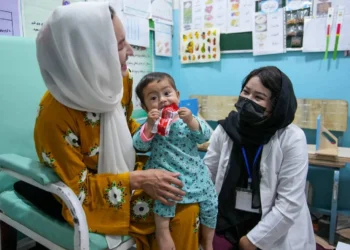
Before the Taliban’s return to power, Afghanistan was largely a victim of Islamic extremism, whose production and dissemination centers were located beyond its borders—centers established at the height of the Cold War with extensive support from the West, Saudi Arabia, and Pakistan to bog down the former Soviet Union in Afghanistan. However, after the collapse of the Soviet Union, these schools not only continued to exist but also increased in number. Since then, tens of thousands of religious schools in Pakistan have functioned as terrorist factories, serving as recruitment hubs for dozens of terrorist groups, including al-Qaeda, ISIS, the Afghan Taliban, and the Pakistani Taliban. Now that the Taliban have returned, they are replicating this experience within Afghanistan. Pakistan has already done its part in this area, and the Taliban must now fulfill their own responsibility. The Taliban’s extensive push to establish religious schools in Afghanistan indicates that Islamic extremism is striving to take greater regional steps toward advancing the project of global jihad. It appears the Taliban are increasingly seeking self-sufficiency in supplying human resources for terrorism and, in addition, aim to achieve success in exporting terrorism.
The potential for localizing terrorism in Islamic countries, including Afghanistan, is significantly high, as these nations face deep political, economic, and cultural crises on top of their religiosity, and progressive forces in these societies are either absent or too weak. Islamic extremists can easily portray themselves as the “saviors of humanity” and rally a desperate and marginalized majority around them. The Talibanization of life in Afghanistan through the creation of more religious schools finds its more precise meaning in this context.
Fertile Ground for Cultivating Terrorism
Afghan society, for several reasons, is fertile ground for the growth and development of terrorism. With time, this land becomes more tilled and increasingly productive:
A: Since the majority of Afghans are Muslims, there exists a natural receptivity to Islamic extremism. Extremist Islamic groups can easily draw in large segments of youth and adolescents through the establishment of religious schools and other seemingly harmless cultural institutions. Additionally, in Afghanistan—an Islamic country where people have a strong inclination toward religious education—religious schools have long existed, and nearly all Afghans have received Islamic instruction in these centers during childhood. These grassroots schools, which were not initiated by previous governments, hold no official status under the Taliban regime either, making it difficult for the group to properly supervise them. Thus, while these schools can significantly support the survival of the Taliban regime, they also hold the potential to be exploited by other terrorist groups, such as ISIS. In that case, we would witness a repeat of the same tragedy the Taliban brought upon the Afghan people during the twenty years of U.S. military presence in the country—only this time, with ISIS playing the Taliban’s former role.
B: Afghan culture is deeply xenophobic. One of the major reasons behind the historical resistance of Afghans against greater powers stems from this very xenophobia. This attitude existed in the land long before the advent of Islam and, therefore, cannot be attributed solely to the religiosity of Afghan culture. The arrival of Islam only deepened this xenophobia, which once posed significant challenges for Islam itself. The fierce resistance of the people of this region against Arab Muslim conquerors is documented in history. In any case, with the institutionalization of Islam in the country, the alienation of reason became more pronounced. One of the reasons the former Soviet Union failed in Afghanistan was that the regime it supported in Kabul clashed with Islam. Islamic fundamentalists seized this opportunity and mobilized the population by framing the conflict as a war between Islam and disbelief. With each foreign invasion, Afghanistan’s xenophobia has intensified and taken on new forms. When this xenophobia merges with Islam, it becomes even more deadly and savage.
C: Afghanistan is a country where leftist politics have never taken root due to various reasons. The groups that have operated under this banner, rather than presenting practical and constructive alternatives, have largely engaged in imitation and misapplication of Marxism, becoming deeply entrenched in nationalism and ethnic politics—dominant tendencies in Afghan power structures. Afghan-style ethnic nationalism is so potent, persistent, and entrenched that it has even absorbed leftist ideologies that once advocated proletarian internationalism. Today’s nationalist left is often more fervent in ethnic politics and linguistic partisanship than even right-wing ethno-Islamists. In the absence of a strong and mass-based leftist movement that could organize and lead the people’s demands for justice and human rights, reactionary forces, leveraging their social bases, can easily present themselves as viable alternatives and maintain their popularity among the underprivileged, thereby diverting their quest for justice.
During the twenty years of Western military presence in Afghanistan, although opportunities arose for intellectuals and alternative groups to engage in public awareness and political participation, aiming to offer new leadership for the people and liberate them from Islamic fundamentalism, these groups became so engrossed in the NGO-driven culture of post-2001 Afghanistan that they neglected their core responsibilities. Those who should have used the opportunity to benefit the people and build a liberation-oriented leftist movement instead fell into routine and populism. Consequently, Islamic fundamentalists in the form of the Taliban returned stronger and more organized than before.
Conclusion
- During the Cold War, Western intelligence agencies created a terrifying entity in Afghanistan that has not only brought catastrophe upon the people of Afghanistan but, at times, has also slipped beyond the control of its creators, causing them trouble as well.
- Islamic fundamentalists exist in various forms and appearances in Afghanistan, but they share a common substance and goal, each operating in different arenas toward the same objective.
- The recruitment sources for international terrorism are gradually becoming localized, and the Taliban—as an Islamist group in power—are now trying to cultivate a new generation of Islamic extremists. This move is meant to ensure their continued dominance in the country while also serving as a major step toward advancing the global jihadist project.
You can read the Persian version of this analysis here:
مدارس طالبانی و خطری که چندان جدی گرفته نمیشود | روزنامه ۸صبح