• 8AM.MEDIA
  • ویب‌سایت فارسی
  • پښتو ویب‌پاڼه
  • اۉزبېکچه ویب‌سایت
  • Podcast
Tuesday, October 20, 2026
Hasht-e Subh
  • Home
  • News
    • Afghanistan News
    • World News
  • Opinion
    • Editorial
    • Analysis
  • Reports
    • Daily Reports
    • Investigative Reports
  • Society
    • The story of people
  • Women’s Word
  • Columns
    • Three Years After Afghanistan’s Fall: The Taliban’s Resurgence
    • Towards Equality
    • The Resurgence of the Taliban: Two Years Since Afghanistan’s Fall
    • Hebatullah Report Special Edition
    • Resistance for Education Special Edition
    • Special Column on Taliban’s Education Curriculum
    • Nawroz
  • Interviews
  • Contact Us
    • About Us
    • 8AM MEDIA Annual Awards
    • Submit an Article to Hasht-e-Subh
  • 8am.mediaBack
Subscribe
No Result
View All Result
  • Home
  • News
    • Afghanistan News
    • World News
  • Opinion
    • Editorial
    • Analysis
  • Reports
    • Daily Reports
    • Investigative Reports
  • Society
    • The story of people
  • Women’s Word
  • Columns
    • Three Years After Afghanistan’s Fall: The Taliban’s Resurgence
    • Towards Equality
    • The Resurgence of the Taliban: Two Years Since Afghanistan’s Fall
    • Hebatullah Report Special Edition
    • Resistance for Education Special Edition
    • Special Column on Taliban’s Education Curriculum
    • Nawroz
  • Interviews
  • Contact Us
    • About Us
    • 8AM MEDIA Annual Awards
    • Submit an Article to Hasht-e-Subh
  • 8am.mediaBack
No Result
View All Result
Hasht-e Subh
No Result
View All Result

The Third Doha Meeting: Faint Hopes for Afghanistan

Mohammad Farhaad Mohammad Farhaad
3 June 2024 - Solar Hijri Date: 1403/03/14 [t_time:1717418578]
Hasht-e Subh Daily (8am Media) Editorial symbol.

The people of Afghanistan have become accustomed to regional and international conferences about their country over the past half-century, often anticipating their failure to resolve the nation’s crises. Based on repeated experiences, except for rare instances like the Bonn Conference following September 11, most meetings and discussions related to Afghanistan have proven futile, especially those managed by the United Nations. One of the most unsuccessful examples was the UN’s efforts during the final days of Dr. Najibullah’s government, which led to the onset of civil wars and the destruction of Kabul. The UN could not even prevent the assassination of the then-president, who had sought refuge in their office, nor take subsequent action to punish the perpetrators. Currently, the prospect of the third Doha meeting does not inspire any hope among the weary and disillusioned people of Afghanistan, and there is no interest in following its developments.

The failure of these meetings stems from both internal and external factors. Domestically, the absence of movements with plans to rescue the country from its prolonged crisis and the simultaneous ability to mobilize the masses plays a crucial role. Weak and impoverished political and social parties have lost their credibility among the people because they are unfamiliar with the basics of political work, which involves dialogue and finding common ground for resolving issues. In traditional societies like Afghanistan, influential figures with broad popular acceptance can sometimes fill the void left by the absence of modern and organized parties, facilitating a consensus among political forces. However, currently, we do not see the presence or activity of such individuals. Broad popular acceptance, coupled with the potential for national mobilization, demands the courage to step forward, negotiate, exert pressure, and inspire hope, qualities that are not observed even among the most renowned figures today. When the internal political scene of a country is entrenched in lethargy and collapse, international conferences also fail to achieve anything, as they do not find strong domestic partners to implement their plans.

The absence of a national agenda in Afghanistan’s political landscape has led to the fragmentation of political forces, resulting in their dependency on various nearby and distant countries. This fragmentation is so profound that it has affected not only anti-Taliban forces, including political parties and civil groups but also the ranks of the Taliban, who are ostensibly the most unified group in the current scenario. The Taliban are now divided into factions such as pro-Iranian Taliban, pro-Pakistani Taliban, Taliban in favor of engagement with the West, Taliban allied with al-Qaeda, and other smaller groups. What has so far prevented severe internal division among them is the substantial material benefits they receive from both external and internal sources, which would significantly diminish if internal conflicts were to erupt.

On the international level, the success of meetings and discussions requires a relative alignment among influential regional and international countries. This was somewhat achieved during the Bonn Conference, where the United States, Europe, Russia, Iran, and other influential countries agreed on establishing a new administration in Afghanistan that could represent the country’s diversity, maintain good relations with regional and global nations, and adhere to international norms and conventions. Currently, such alignment is absent among these countries concerning Afghanistan. Each country is focused on leveraging the existing political groups within Afghanistan to its advantage and to harm its rivals. For many of these countries, Afghanistan has lost its identity as a nation-state and is seen as a battleground for future proxy wars. Consequently, the dominance of an extremist armed group in the country is not a major concern for many of these nations, and the establishment of a conventional political system that would ensure the country’s stability and development is not of importance to them.

The upcoming meeting in Doha fails to inspire hope among the people of Afghanistan because it lacks signs of addressing the fundamental issues and finding solutions. This meeting, like previous Doha meetings concerning Afghanistan, has been a source of anxiety rather than hope from the beginning. For millions of citizens of Afghanistan, the name Doha, unlike Bonn which led to the formation of a relatively all-inclusive system, is associated with the beginning of a process that culminated in the collapse of a government and the uncertainty of a nation. Every time news of a new dialogue emerges it brings with it a new wave of concern.

The greatest concern among citizens of Afghanistan, both inside and outside the country, regarding the Doha meetings is that these discussions might pave the way for legitimizing the Taliban and normalizing the rule of an extremist armed group. This includes presenting gender apartheid, ethnic discrimination, and political monopoly as acceptable, while atrocities such as human rights violations, the absence of a system based on the will of the people, disregard for international conventions, and the deprivation of women’s education and activities are normalized. Citizens of Afghanistan are deeply worried that their fate might be decided behind closed doors, far from their eyes and ears, forcing them to sacrifice thousands of their children to escape it. They view Doha with anxiety and fear, associating it with the loss of freedom, suppression of free speech, the collapse of education, the exodus of intellectuals, the dominance of armed forces, rejection of arts, opposition to modernity, defiance of the world, and the use of religion to oppress defenseless people.

In this context, many people of Afghanistan wonder if there will ever come a day when the name “Doha” will not symbolize collective psychological torment and news of collapse and regression to the dark ages. Will there ever be a day when a Doha meeting marks the end of one of the darkest chapters in the country’s history and the beginning of a new chapter where governance emerges from the people’s will, not from the will of the gun, and Afghanistan becomes a home for all its citizens once again?

You can read the Persian version of this editorial note here:

نشست سوم دوحه و امیدهای اندک | روزنامه ۸صبح 

ShareTweetSendSendShare

Related Posts

Researchers, students and Polish citizens attend a conference in Kraków, Poland, on the human rights situation in Afghanistan under Taliban rule. (Photo credit: Exclusive)
Afghanistan News

Conference on Afghanistan’s Human Rights Situation Held in Poland

15 October 2026 [t_time:1792074771]
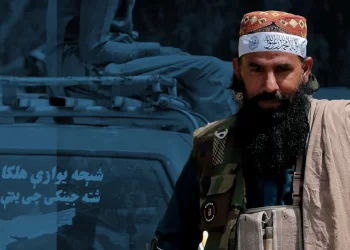
A Taliban member in a camouflage vest stands in front of a vehicle carrying armed men. (Photo Credit: AFP)
Analysis

Why Have the Taliban Lasted This Long?

19 September 2026 [t_time:1789843474]
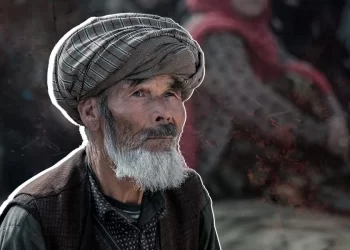
An elderly man from Afghanistan looks on, as many families across the country rely on remittances from relatives abroad to survive worsening poverty. (Photo credit: AFP)
Daily Reports

Poverty and Hunger Deepen in Afghanistan as Families Depend on Remittances from Abroad

9 September 2026 [t_time:1788956650]

Latest

Loading latest news...

Popular stories

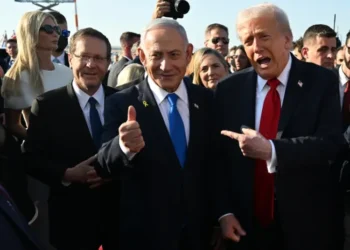
  • Donald Trump – U.S. President with Benjamin Netanyahu – Israeli Prime Minister in a gathering of people (Photo: Getty Images) Donald Trump – U.S. President with Benjamin Netanyahu – Israeli Prime Minister in a gathering of people (Photo: Getty Images)

    US Senator Criticizes Netanyahu’s Remarks Justifying War Against Iran

    Share
    Share Tweet
  • Trump Again Says War with Iran Will End “Very Soon”

    Share
    Share Tweet
  • US Defense Secretary Warns Iran of “Destruction”

    Share
    Share Tweet
  • UN Report Reveals Shifts in Family Attitudes and Rise in Domestic Violence in Afghanistan

    Share
    Share Tweet
  • Russian Foreign Intelligence Chief Arrives in Kabul

    Share
    Share Tweet

Podcast

Insights
Insights

Join Lynne O’Donnell for 8AM’s podcast series, Insights.
Lynne talks with generals, diplomats, soldiers, journalists, politicians, activists, people who have front row seats for conflicts around the world, and citizens with a story to tell, happy or sad. For this first series, Afghanistan is the focus. Lynne and her guests talk about the collapse of the republic in August, 2021, and the impact since — for the people of Afghanistan, for the security of the region, for the safety of the world. It’s important, interesting and insightful.

Insights/22: Controlling the Narrative with Mina Sharif
byinsights8am

Controlling the Narrative

Lynne O’Donnell talks with Mina Sharif, author, activist, women’s rights campaigner, educator and mentor. They discuss who controls the narrative and who speaks for Afghanistan’s people when the Taliban appear to have seized control not only of the country but of the message, too.

Have a listen

Insights/22: Controlling the Narrative with Mina Sharif
Episode play icon
Insights/22: Controlling the Narrative with Mina Sharif
Episode Description
Episode play icon
Insights/21: Media Meltdown with Zahra Joya
Episode Description
Episode play icon
Insights/20: Terror Inc with Scott Richards
Episode Description
Episode play icon
Insights/19: Busting Stereotypes with Bushra Gohar
Episode Description
Episode play icon
Insights/18: Media Matters with Waliullah Rahmani
Episode Description
Episode play icon
Insights/17: What Goes Around Comes Around with Sima Samar
Episode Description
Search Results placeholder
Hasht-e Subh

8AM Media, also known as Hasht-e-Subh Daily, stands as Afghanistan's premier independent and non-profit newspaper, resonating as a beacon of journalistic integrity since its establishment in June 2007 by esteemed Afghan journalists and human rights advocates. With a steadfast commitment to citizen journalism and civic education, Hasht-e-Subh Daily has earned its place as the most esteemed publication in the nation.

Publisher: Sanjar Sohail
Email: [email protected]
Executive Director: Parwiz Kawa
Email: [email protected]

Read More

Wakhan Road: Taliban Hype, Chinese Silence

Afghanistan in Russia’s Geopolitical Calculations

Abortions Rise in Kabul Amid Worsening Economic Hardship

Russia and the Taliban: From Security Pragmatism to Geopolitical Calculation

Infrastructure Dependence Threatens Economic Sovereignty in the Region

Editor’s Choice

Every Saturday morning, 8AM MEDIA English Services Department will guide you through the week’s biggest stories from Afghanistan and the international community.

Subscribe

© 2026 - ©Hasht-e Subh Daily

No Result
View All Result
8am.Media
پښتو ویب‌پاڼه
ویب‌سایت فارسی
اۉزبېکچه ویب‌سایت
  • Home
  • News
    • Afghanistan News
    • World News
  • Opinion
    • Editorial
    • Analysis
  • Reports
    • Daily Reports
    • Investigative Reports
  • Society
    • The story of people
  • Women’s Word
  • Columns
    • Three Years After Afghanistan’s Fall: The Taliban’s Resurgence
    • Towards Equality
    • The Resurgence of the Taliban: Two Years Since Afghanistan’s Fall
    • Hebatullah Report Special Edition
    • Resistance for Education Special Edition
    • Special Column on Taliban’s Education Curriculum
    • Nawroz
  • Interviews
  • Contact Us
    • About Us
    • 8AM MEDIA Annual Awards
    • Submit an Article to Hasht-e-Subh
  • 8am.media

© 2026 - ©Hasht-e Subh Daily