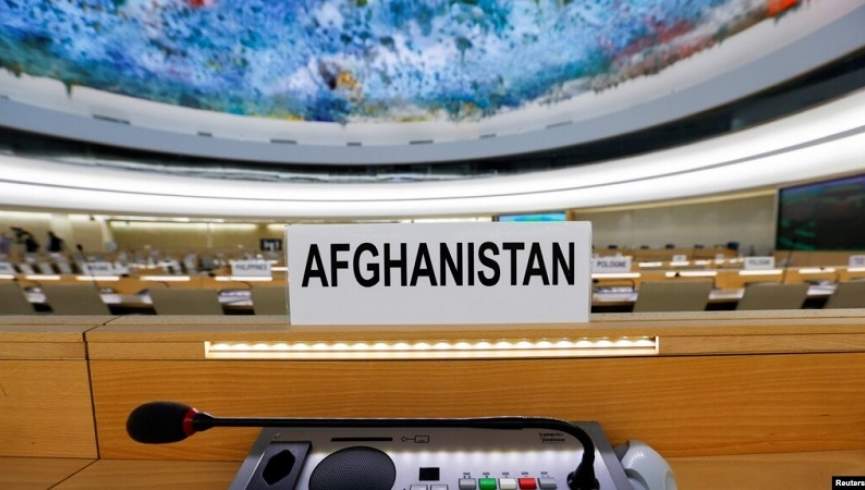
The third Doha meeting, hosted by the United Nations, was held without the participation of women, civil society representatives, ethnic groups, war victims, and political and military opponents of the Taliban, despite widespread reactions from citizens of Afghanistan and some human rights organizations. Special representatives from about 25 countries and five international and regional organizations attended this meeting. Simultaneously, widespread protests were held in various cities around the world. Some citizens of Afghanistan abroad, participating in global demonstrations, demanded an end to Taliban rule, stating that this group has extensively hosted international terrorists. The National Resistance Council for the Salvation of Afghanistan has stated that as long as the United Nations continues its current approach, it will no longer cooperate with this institution. Some human rights activists have also said that the current structure of the Doha meeting contradicts Security Council resolutions. According to them, the main problem in Afghanistan is the Taliban’s totalitarianism and the gender apartheid regime imposed by this group.
The third Doha meeting, hosted by the United Nations, was held on Sunday, June 30, with special representatives from 25 countries and five international organizations. Rosemary DiCarlo, the Deputy Secretary-General of the United Nations, hosted this meeting.
Special representatives of the countries, hosted by the United Nations at the third Doha meeting, discussed the private sector with a focus on women entrepreneurs, banking, drug control, and the economic crisis. There was no official agenda for discussing human rights and women’s rights. It was stated that six people, including three women and three men, representing Afghan women and civil society, would participate on the sidelines of this meeting, but so far, three women have rejected the UN’s invitation.
According to reports, the main objective of the United Nations and the special representatives of the countries is to create a platform for dialogue and interaction with the Taliban. Additionally, the countries’ shared concerns will be discussed with the Taliban delegation.
Representatives from the United States, Russia, China, India, Pakistan, Japan, Canada, France, Germany, Italy, Kazakhstan, Kyrgyzstan, Norway, Qatar, South Korea, Saudi Arabia, Switzerland, Tajikistan, Turkey, Iran, Armenia, the United Arab Emirates, the United Kingdom, Uzbekistan, and Indonesia, along with representatives from the European Union, the Organization of Islamic Cooperation, the Shanghai Cooperation Organization, the Asian Development Bank, and the World Bank, were invited to this meeting.
The third Doha meeting has faced widespread criticism both domestically and internationally due to the exclusion of human rights, especially women’s rights, from its agenda. Most critics have argued that this move by the United Nations is contrary to its charter and that the organization has failed to fulfill its fundamental responsibilities, which include defending human rights values.
Global Protests and Boycott of the Doha Meeting
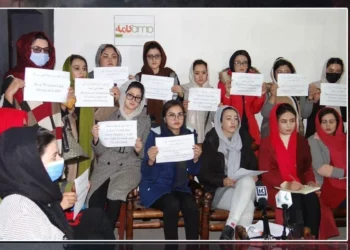
Hundreds of civil activists and citizens have protested in various European and Asian cities. citizens of Afghanistan living abroad in France, Germany, and the Netherlands have criticized the Taliban’s actions regarding the exclusion of women and demanded an end to engagement with this group.
At the same time, some girls in closed locations within Afghanistan have also reacted, stating that the Taliban have acted as “a terrorist group,” taking away all human rights and values from women in Afghanistan. They emphasized that no organization, including the United Nations, has the right to negotiate on behalf of women with this group.
Additionally, women who fled to Iran, Pakistan, and some other regional countries after the Taliban takeover have held widespread protests and published protest videos, calling for a boycott of the Doha meeting and urging countries to avoid engaging with the Taliban.
Rejection of Women’s Participation on the Sidelines of the Doha Meeting
Three women invited to the Doha meeting have refused to attend. Habiba Sarabi, Nabila Mosleh, and Zubaida Akbar were invited to this meeting but declined to attend the sidelines due to the exclusion of women and human rights from the main agenda.
Habiba Sarabi, a member of the former government’s negotiation team, explained her reasons for not attending this meeting on her X (formerly Twitter) page, stating that the United Nations has failed to implement the Security Council resolution regarding the appointment of a special representative. According to her, the current agenda of the Doha meeting has shifted from implementing the UN special coordinator’s proposed roadmap to focusing on technical issues and sidelining political solutions. Sarabi emphasized that women should be present at the main negotiation table in Doha. She added that the human rights situation in Afghanistan is worsening, and no method has been able to hold the Taliban accountable for human rights violations, especially against women, Hazaras, and religious minorities.
Nabila Mosleh, the former Deputy Minister of Women’s Affairs, also rejected the UN’s invitation to participate in the Doha meeting. She wrote on her X page, “Participating in a side meeting will only be at the level of a meeting in which I will not participate.”
Zubaida Akbar, a human rights activist, also announced that she had received the United Nations invitation to participate in the Doha meeting but would not attend.
The non-participation of these women on the sidelines of the third Doha meeting has been welcomed by human rights activists and some politicians in the country. According to them, this action reflects a correct understanding of the women’s situation and protests against the biased and “Taliban-friendly” policies of the United Nations.
Opponents’ Views on the Doha Meeting and Criticism of Its Overstatement
The Afghanistan Diplomatic Assembly emphasized the necessity of including all political forces, including women, in the third Doha meeting. It described the exclusion of human rights issues, women’s rights, and the appointment of a special UN representative from the agenda as regrettable. In a statement, this assembly called on the United Nations and its Security Council to make necessary decisions to implement Resolutions 2679 and 2721 to create a roadmap for Afghanistan’s full integration into the global community.
Similarly, the National Resistance Council for the Salvation of Afghanistan issued a statement calling the holding of this meeting without the participation of political and civil groups a “disgrace.” The council emphasized that the content of this meeting is extremely weak and its structure contradicts the principles of the United Nations. In this statement, the National Resistance Council for the Salvation of Afghanistan clarified that it is no longer ready to cooperate with the UN under its current approach, describing the UN’s current actions as a political disgrace. According to this council, inviting the Taliban to the Doha meeting and engaging with them makes it difficult to find a way out of Afghanistan’s current situation.
Meanwhile, Rahmatullah Nabil, the former head of Afghanistan’s National Directorate of Security, said that Afghanistan’s interests are not discussed at the third Doha meeting. According to him, regional and Western countries are pursuing their hidden and proxy goals. On his X (formerly Twitter) page, Mr. Nabil wrote, “If there is no hidden agenda, what forced the UN to abandon its basic principles in front of the Taliban?” He emphasized that this meeting is a continuation of Zalmay Khalilzad’s negotiations, the former US envoy, with the Taliban, which led to the collapse of the previous government.
Moreover, several others have described the extensive coverage of the third Doha meeting as overstatement and propaganda. They said that the media should not overstate such meetings that yield no results.
Sediq Sediqqi, the former spokesman of the president of Afghanistan, wrote on his X page, “Why is the Doha meeting, which is held to protect the interests of a few countries and does not concern the people of Afghanistan, being so exaggerated and promoted?”
The Taliban’s View on the Doha Meeting
The Taliban, who did not participate in the second Doha meeting due to their demands not being met, have welcomed the holding of the third Doha meeting and described it as the UN’s acceptance of their regime.
Abdul Kabir, the political deputy of the Taliban’s Prime Minister, before the trip of Zabihullah Mujahid, the Taliban’s spokesperson and the head of their delegation at the Doha meeting, said that the UN has accepted the conditions of this group as a “responsible government” after negotiations. He claimed that the international community’s view of the Taliban has changed.
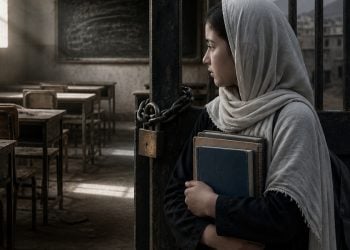
On the other hand, Rina Amiri, the US Special Envoy for Afghan Women, stated that she has heard the demands of a wide range of women and will share their concerns with the special representatives of countries and the UN at the third Doha meeting. She said that citizens of Afghanistan, especially women, should be given a space at the negotiation table. Ms. Amiri added that one of the demands of women and human rights networks is that the international community should continue to pressure the Taliban to immediately revoke discriminatory decrees that limit women’s and girls’ access to education, work, and social participation.
However, Mitra Mehran, a women’s rights activist, and participant in the second Doha meeting, wrote in a tweet that the Doha meeting, in terms of structure, values, and legality, contradicts the basic goals of UN Security Council Resolution 2127, on which this meeting is based. She described the main problems of Afghanistan as gender apartheid, monopoly, and the Taliban’s totalitarianism, emphasizing that such agendas and structures cannot yield desirable results.
You can read the Persian version of this daily report here: