• 8AM.MEDIA
  • ویب‌سایت فارسی
  • پښتو ویب‌پاڼه
  • اۉزبېکچه ویب‌سایت
  • Podcast
Thursday, October 15, 2026
Hasht-e Subh
  • Home
  • News
    • Afghanistan News
    • World News
  • Opinion
    • Editorial
    • Analysis
  • Reports
    • Daily Reports
    • Investigative Reports
  • Society
    • The story of people
  • Women’s Word
  • Columns
    • Three Years After Afghanistan’s Fall: The Taliban’s Resurgence
    • Towards Equality
    • The Resurgence of the Taliban: Two Years Since Afghanistan’s Fall
    • Hebatullah Report Special Edition
    • Resistance for Education Special Edition
    • Special Column on Taliban’s Education Curriculum
    • Nawroz
  • Interviews
  • Contact Us
    • About Us
    • 8AM MEDIA Annual Awards
    • Submit an Article to Hasht-e-Subh
  • 8am.mediaBack
Subscribe
No Result
View All Result
  • Home
  • News
    • Afghanistan News
    • World News
  • Opinion
    • Editorial
    • Analysis
  • Reports
    • Daily Reports
    • Investigative Reports
  • Society
    • The story of people
  • Women’s Word
  • Columns
    • Three Years After Afghanistan’s Fall: The Taliban’s Resurgence
    • Towards Equality
    • The Resurgence of the Taliban: Two Years Since Afghanistan’s Fall
    • Hebatullah Report Special Edition
    • Resistance for Education Special Edition
    • Special Column on Taliban’s Education Curriculum
    • Nawroz
  • Interviews
  • Contact Us
    • About Us
    • 8AM MEDIA Annual Awards
    • Submit an Article to Hasht-e-Subh
  • 8am.mediaBack
No Result
View All Result
Hasht-e Subh
No Result
View All Result

TTP and the Afghan Taliban: Distinct Initiatives, Shared Efforts

Muhammad Ali Nazari Muhammad Ali Nazari
30 October 2024 - Solar Hijri Date: 1403/08/09 [t_time:1730307624]
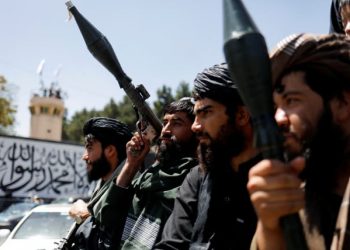
TTP militants gather under the slogan 'Long Live TTP,' highlighting their growing influence in Taliban-controlled areas. (Photo Credit: TARIQ MAHMOOD / AFP)

TARIQ MAHMOOD / AFP

When the Afghan Taliban, with direct support from the Pakistani government and military, took control of Afghanistan, Islamabad and Rawalpindi expected the group to prevent the Tehrik-i-Taliban Pakistan (TTP) from using Afghan soil against Pakistani interests. From the birth of the Taliban, Pakistan had closely cooperated with them, and after the group’s resurgence, Pakistan’s then-ISI chief, General Faiz Hameed, traveled to Kabul. After having tea at the Kabul Serena Hotel, he played a key role in forming the Taliban’s cabinet. Imran Khan Niazi, Pakistan’s Prime Minister at the time, expressed happiness over the fall of the Afghan government to the Taliban, and Pakistan’s diplomatic activities continued in Kabul and other provinces of Afghanistan. Since then, numerous visits between the two sides have taken place, involving military, religious, and diplomatic delegations. On the international stage, Pakistan still acts as the spokesperson for the Taliban. Pakistani representatives at the United Nations and other global forums speak in a manner that makes it seem as though they are representing the Taliban. All of this highlights the depth and breadth of the Taliban-Pakistan relationship, while also demonstrating the mutual dependence between the two. The Afghan Taliban, unable to have an official presence in international forums, rely on Pakistani lobbyists, while Islamabad depends on the Taliban’s cooperation due to the presence of TTP leaders and fighters in Afghanistan.

Tehrik-i-Taliban Pakistan (TTP) and the Afghan Taliban share a unified strategy and a common goal, leading them to cooperate across both geographies. While some Afghan Taliban members harbor dreams of erasing the Durand Line and merging large parts of Pakistani territory into Afghanistan—an ambition they sometimes express through various pretexts, such as map drawing—each branch has its distinct project and operates within its specific territory. Nonetheless, their shared goals and ideology compel these two branches to collaborate across borders to advance both projects. The common objective of both branches is to establish a religious-ethnic government, something the Afghan Taliban have already achieved, and which the Pakistani Taliban are also pursuing. Along the way, they assist one another wherever needed and wherever possible. Recently, media reports have highlighted small but concrete examples of this cooperation.

According to some reports, TTP members hold official roles within Afghan Taliban-controlled government institutions, collect taxes and tithes in certain regions, and have a notable presence at checkpoints in the two provinces of Paktia and Paktika. Additionally, in the southern and eastern provinces of Afghanistan, Afghan Taliban and TTP fighters have jointly carried out operations, such as collecting the red caps that symbolize the Pashtun Protection Movement (PTM) in Pakistan. Both branches of the Taliban currently oppose the PTM’s policies. Both groups expected the recent large PTM gathering in Khyber to voice opposition to Pakistan’s geography. Even TTP, which was actively fighting the Pakistani army, declared a temporary ceasefire to ensure the peaceful conduct of the gathering. However, contrary to the expectations of both Taliban branches, the PTM gathering issued declarations against them. The main speakers, including Manzoor Pashteen, the leader of Pakistan’s PTM, criticized the Afghan Taliban for human rights violations, such as banning girls’ education and failing to establish an inclusive government, and called for the reopening of schools and universities for girls. The PTM also demanded that the TTP leave Khyber Pakhtunkhwa alongside the Pakistani army. These decisions went against the expectations of both Taliban factions, and since then, both groups have punished anyone who wears the symbolic PTM cap.

Another example of cooperation between the two Taliban branches comes from Pakistan. On September 29, a report surfaced that an Afghan Taliban fighter was killed in a clash with Pakistani security forces in Khyber Pakhtunkhwa. The individual, identified as Qari Safiullah from Laghman, Afghanistan, was part of the Afghan Taliban. Previously, a Taliban member in Kunduz had mentioned that hundreds of Afghan Taliban were fighting alongside the TTP against the Pakistani army. Additionally, reports have emerged suggesting that TTP has pledged allegiance to Mullah Hibatullah, the Afghan Taliban’s supreme leader. Some Pakistani politicians, including Afrasiab Khattak, have frequently raised this issue. Considering the above points, and the fact that TTP leaders and fighters live in designated settlements in Afghanistan, it is undeniable that the two Taliban factions are cooperating.

The Pakistani Taliban are influenced by, and in some cases, even subordinate to, the Afghan Taliban. In this regard, Islamabad’s expectations of the Afghan Taliban have not been met, occasionally leading to tensions between the two sides. It appears that the Afghan Taliban are repaying a debt to the Pakistani Taliban. During the Afghan Republic era, the TTP fought alongside the Afghan Taliban against the Afghan government, and now that they need manpower for their fight against the Pakistani government, the Afghan Taliban are repaying that debt. Additionally, both groups share the common goal of establishing an Islamic-ethnic regime in their respective countries. It seems that as long as these groups continue to advance the projects of their financial backers, they will maintain their mutual ties and support each other at specific times and in specific places. There is no doubt that neither of these groups would have gained access to such substantial military and financial resources without external support. 

You can read the Persian version of this analysis here:
تی‌تی‌پی و طالبان افغانستان؛ پروژه‌های جداگانه، کار مشترک | روزنامه ۸صبح 
ShareTweetSendSendShare

Related Posts

Pakistan Army personnel sit in a military vehicle. (Photo: AFP)
Afghanistan News

Pakistan Army Says 15 Militants Killed While Attempting to Enter Pakistan From Afghanistan

3 September 2026 [t_time:1788428486]
Hasht-e Subh Daily (8am Media) Editorial symbol.
Editorial

The Echoing Demand for Justice Across a Fractured Region

21 October 2024 [t_time:1729508032]
The Taliban’s Embrace of International Terrorists and the Western Hypocrisies
Analysis

The Taliban’s Embrace of International Terrorists and the Western Hypocrisies

5 July 2024 [t_time:1720167074]

Latest

Loading latest news...

Popular stories

  • An aerial view shows collapsed buildings and widespread damage following an earthquake in Panama (Photo: Reuters)

    More Than 200 Aftershocks Recorded in Panama Since Friday’s Earthquake

    Share
    Share Tweet
  • Axios: Trump Expects Ukraine Not to Attack Russian Oil Refineries

    Share
    Share Tweet
  • UN Report Reveals Shifts in Family Attitudes and Rise in Domestic Violence in Afghanistan

    Share
    Share Tweet
  • The Politics We Inherited: Rethinking Afghanistan’s Political Culture

    Share
    Share Tweet
  • Trump Again Says War with Iran Will End “Very Soon”

    Share
    Share Tweet

Podcast

Insights
Insights

Join Lynne O’Donnell for 8AM’s podcast series, Insights.
Lynne talks with generals, diplomats, soldiers, journalists, politicians, activists, people who have front row seats for conflicts around the world, and citizens with a story to tell, happy or sad. For this first series, Afghanistan is the focus. Lynne and her guests talk about the collapse of the republic in August, 2021, and the impact since — for the people of Afghanistan, for the security of the region, for the safety of the world. It’s important, interesting and insightful.

Insights/22: Controlling the Narrative with Mina Sharif
byinsights8am

Controlling the Narrative

Lynne O’Donnell talks with Mina Sharif, author, activist, women’s rights campaigner, educator and mentor. They discuss who controls the narrative and who speaks for Afghanistan’s people when the Taliban appear to have seized control not only of the country but of the message, too.

Have a listen

Insights/22: Controlling the Narrative with Mina Sharif
Episode play icon
Insights/22: Controlling the Narrative with Mina Sharif
Episode Description
Episode play icon
Insights/21: Media Meltdown with Zahra Joya
Episode Description
Episode play icon
Insights/20: Terror Inc with Scott Richards
Episode Description
Episode play icon
Insights/19: Busting Stereotypes with Bushra Gohar
Episode Description
Episode play icon
Insights/18: Media Matters with Waliullah Rahmani
Episode Description
Episode play icon
Insights/17: What Goes Around Comes Around with Sima Samar
Episode Description
Search Results placeholder
Hasht-e Subh

8AM Media, also known as Hasht-e-Subh Daily, stands as Afghanistan's premier independent and non-profit newspaper, resonating as a beacon of journalistic integrity since its establishment in June 2007 by esteemed Afghan journalists and human rights advocates. With a steadfast commitment to citizen journalism and civic education, Hasht-e-Subh Daily has earned its place as the most esteemed publication in the nation.

Publisher: Sanjar Sohail
Email: [email protected]
Executive Director: Parwiz Kawa
Email: [email protected]

Read More

Taliban Loot Second House in Omid-e Sabz Township in One Week

Book Clubs: A Refuge for Girls Amid Educational Restrictions

Omid-e Sabz Township: A Crisis of Justice, Trust, and Human Dignity

Scribbling on Ghazni’s Historic Walls: Indifference That Threatens Cultural Heritage

Taliban Hand Over Former Military Officer’s Body to Family After Five Months

Editor’s Choice

Every Saturday morning, 8AM MEDIA English Services Department will guide you through the week’s biggest stories from Afghanistan and the international community.

Subscribe

© 2026 - ©Hasht-e Subh Daily

No Result
View All Result
8am.Media
پښتو ویب‌پاڼه
ویب‌سایت فارسی
اۉزبېکچه ویب‌سایت
  • Home
  • News
    • Afghanistan News
    • World News
  • Opinion
    • Editorial
    • Analysis
  • Reports
    • Daily Reports
    • Investigative Reports
  • Society
    • The story of people
  • Women’s Word
  • Columns
    • Three Years After Afghanistan’s Fall: The Taliban’s Resurgence
    • Towards Equality
    • The Resurgence of the Taliban: Two Years Since Afghanistan’s Fall
    • Hebatullah Report Special Edition
    • Resistance for Education Special Edition
    • Special Column on Taliban’s Education Curriculum
    • Nawroz
  • Interviews
  • Contact Us
    • About Us
    • 8AM MEDIA Annual Awards
    • Submit an Article to Hasht-e-Subh
  • 8am.media

© 2026 - ©Hasht-e Subh Daily