Amid escalating Israeli attacks on Iran, several traders and experts have expressed concerns over the potential halt of commercial shipments belonging to Afghanistan’s industrialists and merchants at Bandar Abbas port. They state that disruptions in Iran’s security situation have raised serious worries about the stoppage or damage of commercial consignments. According to them, the continuation of this situation could disrupt Afghanistan’s supply chain, plunging the country’s fragile economy into further distress.
Some traders and industrialists, in interviews with the Hasht-e Subh Daily, expressed alarm, noting that the ongoing Israeli airstrikes on Iranian soil are causing delays in the loading and transfer of Afghanistan’s commercial goods.
Sayed Ebrahim Sadat, an industrialist in Herat, voiced concerns about the ongoing conflict, stating: “When a region becomes insecure and trade routes are affected, it naturally harms all traders in the region and the people of Afghanistan. We are, of course, affected by these changes. We hope these issues are resolved as soon as possible.”
Meanwhile, some economic analysts warn that with the potential prolongation of hostilities, alternative import routes must be explored, and measures should be taken to strengthen domestic markets to prevent price surges.
Hamidullah Khadem, an economic expert, told the Hasht-e Subh Daily that many factories in Afghanistan import raw materials from Iran, and a significant portion of the country’s market needs and products are supplied through this route. He believes that continued insecurity in Iran could have detrimental consequences for Afghanistan’s economy.
“Changes have also occurred in the fuel sector, such as gas and oil, with prices rising. We hope Afghanistan’s traders explore alternative routes to manage the domestic market and prevent excessive price hikes.” He added.
Khadem noted: “So far, no significant changes have been observed in the prices of other commercial goods, and the process of transfers and trade continues almost normally. However, to prevent potential crises, it is necessary to start considering alternative solutions now to control prices in Afghanistan’s market.”
During Israel’s attacks on Iran, Bandar Abbas—one of Iran’s key commercial ports—was also targeted. According to Iranian media reports, the attack was neutralized by the Islamic Republic’s air defense systems, but concerns have grown regarding the possibility of repeated attacks and their potential impact on trade and transit operations.
Due to its access to international waters, Bandar Abbas plays a vital role in Afghanistan’s trade, and disruptions in the port’s operations could have widespread negative consequences for Afghanistan’s economy.
Afghanistan relies on Bandar Abbas as a critical route for exporting and importing goods. Through this port, Afghanistan’s products are exported to various countries, including those in the Middle East and Europe. Additionally, according to Iranian officials, Afghanistan is Iran’s second-largest trading partner after Iraq, with annual trade exchanges between the two countries exceeding three billion dollars.
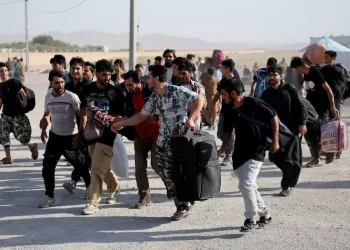
Amid traders’ concerns and rising economic challenges, millions of Afghanistan’s refugees residing in Iran have also been severely affected by Israel’s attacks. In the latest case, the deaths of three Afghanistan citizens due to recent Israeli attacks on Tehran have been confirmed.
Meanwhile, thousands of Afghanistan citizens, particularly former military personnel who fled to Iran after the fall of the government to the Taliban, face significant risks. They say that returning to Afghanistan would expose them to arrest and imprisonment by the Taliban. Alongside them, numerous journalists, students, former government officials, and political and military opponents of the Taliban living in Iran have expressed concerns about the ongoing situation.
In the latest report, the Washington-based Human Rights Advocates (HRA) stated that Israeli airstrikes on Iran over the past six days have resulted in at least 585 deaths and 1,326 injuries. According to the group’s findings, 239 of the victims were civilians.
You can read the Persian version of this report here:
سایه جنگ بر تجارت افغانستان؛ نگرانی از توقف محمولهها در بندرعباس