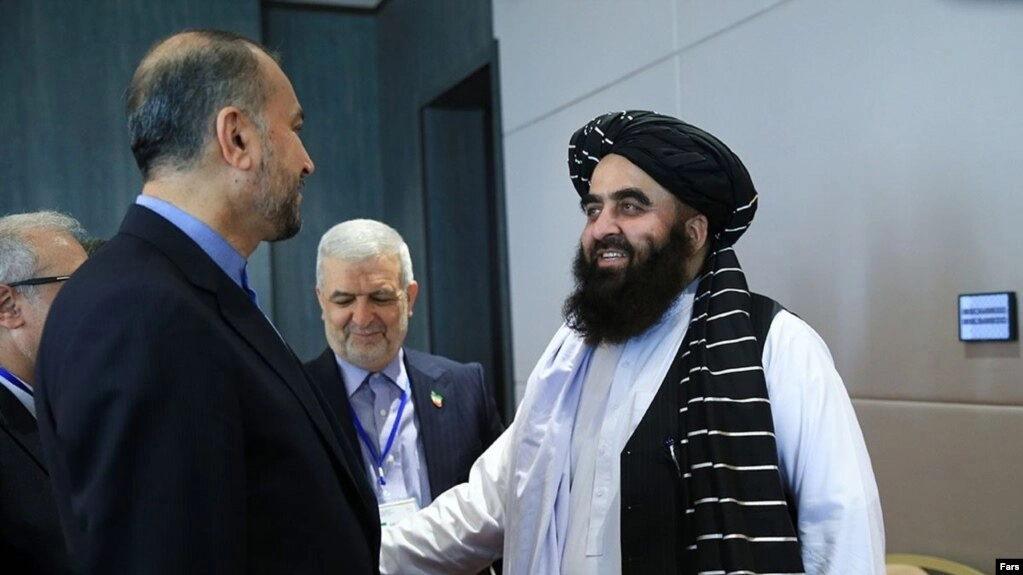
Following the recent border conflict between the Taliban and Iranian border guards, Ahmad Massoud, the leader of the National Resistance Front (NRF), tweeted a stanza of Rumi’s famous poems, indicating that he had warned Iran not to go to the Taliban as he himself was the true acquaintance of Iran. This tweet provoked a widespread response and elicited various reactions from the people of Afghanistan and Iran. Despite the reactions, the content of Massoud’s tweet for the first time officially revealed that the relationship between Massoud’s Front and the Iranian government was not in a good state, and his attempts to persuade the Iranians to support him financially and morally had failed. Previously, the official stance of the Iranian government towards the events that had occurred in Afghanistan over the past two years had demonstrated that the Iranian government viewed the Taliban as a trusted partner and felt elation over their victory against the “Western-backed regime”. Even once, one of the officials of the Iranian Foreign Ministry had declared the resistance against the Taliban to be an American project. The gist of the story is that Iran believes it has a role in bringing the Taliban to victory, and thus, it considers this group to be indebted to it, believing that this group is able to serve Iran’s interests in Afghanistan in a beneficial way. Iranians are so determined to maintain their relationship with the Taliban that one of them, in his reaction to the border clashes between Iran and the Taliban, which resulted in casualties, deemed these conflicts to be minor and referred to them as “family disputes”.
Iranian officials have employed various tactics to justify their backing of the widely-condemned Taliban and to sway public opinion. They have argued that the Taliban of today are distinct from those of the 1990s, a point which was also made by Western media at the time. Some Iranian officials have gone so far as to refer to the Taliban as a “genuine movement of the region” which is rooted in the culture and land of Afghanistan, and which rejects foreign influences. As such, they have argued that the Taliban are worthy of support.
Hammihan, a newspaper based in Tehran, reported that some Iranian officials had dismissed Ahmad Massoud’s strategy against the Taliban by emphasizing the religious similarities Iran had with the Taliban. The officials were reported to have stated that, while they had nothing in common with Massoud, who they perceived as secular, the Taliban were Muslims, and thus, Iran shared around ten percent of their ideology. This statement of the Iranian officials demonstrates the extent of the rift that has developed between Iran and the Taliban opponents, which does not seem to be easily reconciled.
My analysis is that Iran’s foreign policymakers and their allies within Afghanistan are unwavering in their support of the Taliban, not because the Taliban are Muslim and their opponents are non-Muslim, or because the Taliban movement is deeply rooted and authentic. If the criterion was to be secular or otherwise, the Iranians would not be so supportive of Bashar Assad, the dictator of Syria. Do they think Massoud is more secular than Assad? The fact is that other factors and parameters are involved in Iran’s alliance with the Taliban and the disregard of their opponents, which can be listed below:
- It has been admitted by former Foreign Minister of Iran Mohammad Javad Zarif that the Islamic Revolutionary Guard Corps (IRGC) is responsible for formulating Iran’s foreign policy. Zarif’s explanation implies that the Foreign Ministry of Iran does not have a major role in the development of foreign policy strategies. This is due to the fact that security forces and the military tend to view events and developments in neighboring countries and the region from a security perspective, without taking into account the complexities of the situation or adopting a long-term approach. IRGC policymakers often use the formula “the enemy of my enemy is my friend” when deciding on foreign policy, believing that the Taliban have done Iran a great service by forcing the United States to leave Afghanistan and thus deserve friendship and alliance. However, this extreme anti-Americanism has caused Iranian officials to misunderstand the facts, as the most reliable analysts now acknowledge that the Taliban are committed to protecting the interests of the United States in their territory, and the United States and other Westerners do not support the Taliban opposition but instead explicitly condemn it.
- Despite cooperating with the United States in overthrowing the Taliban in 2001, Iran never wanted to create a system in its vicinity that respected the principles of democracy, human rights, and the rights of women and minorities, in order to become a model of freedom and development in the region. Consequently, Iran made every effort to sabotage the post-Bonn process. The rulers of Iran were apprehensive that the ongoing trends in Afghanistan could inspire the citizens of Iran, who had previously opposed the ruling policies of the Islamic Republic of Iran, to rebel against it. With the return of the Taliban, Iran is now confronted with a regime in Afghanistan that shares many similarities with it, such as imposing restrictions on individual, political, and social freedoms, and denying women education and daily activities. Similarly, Iran, like Pakistan, does not want a strong and capable ruling system in Afghanistan and pursues its own national interests without setting any limits. This is evidenced by the fact that a member of the National Security Commission of the Iranian Parliament considers the border conflict between Iran and the Taliban, which resulted in the death of two Iranian soldiers, to be a family dispute.
- The Taliban have long been associated with the cultivation, production, and trafficking of drugs, and their return has enabled the smuggling of drugs to become more prevalent, resulting in a notable increase in cultivation this year. The Islamic Revolutionary Guard Corps (IRGC) also plays a major role in the drug trade in the region. Heshmatollah Falahatpishe, the former head of the National Security Commission of the Iranian Parliament, expressed his criticism of Iran’s foreign policymakers in an interview, claiming that they have instilled a sense of fear in Iran’s foreign policy towards Afghanistan, which led to the Taliban taking control of the embassy. He suggested that the Taliban should be cut off from the source of their large-scale drug trafficking to Iran, as the income they and other Afghan traffickers receive from the export of drugs to Iran is greater than the total construction performance of Iran in a year.
- Falahatpishe’s statement implies that the Iranian government is collaborating with the Taliban in drug trafficking, and has the capability to stop the sources of the Taliban’s drugs, yet has not done so. He disregarded the fact that if the Taliban’s drug sources are cut off, not only will the Taliban suffer, but the Iranian government and its allies will also be affected in the region. It is not reasonable for a government that is under the most extreme global sanctions to ignore this source of income and impede the transit of drugs due to occasional border disputes. It can be concluded that the settlement of the Taliban regime will be beneficial to the Iranian government economically, thus incentivizing the Iranian authorities to support a system in Afghanistan that is not subject to international laws and conventions, and which not only eliminates drugs in the country but also facilitates their cultivation, production, and transit. Political realism dictates that the Iranian government must engage with the Taliban, as their opponents have not been able to make any significant progress thus far. The Taliban are currently in control of Afghanistan and responsible for the leadership of thirty million citizens, and are able to easily suppress any armed resistance. Iran must interact with the Taliban in order to reach out to the several million Afghan refugees in Iran, as well as to protect their interests in Afghanistan, which cannot be achieved by any other faction or group. The notion that commonalities in civilization and the Persian language can link Iran and the Taliban is misguided. The Iranian government will only use language and religion when it can serve its interests, otherwise, it will not. It is important to understand the complexities of politics and not be misled by appearances.
Ultimately, it must be acknowledged that the Taliban have consistently achieved their objectives through the use of brute force, and have not made any concessions in their nearly thirty years of existence. This group also employs force and weaponry extensively to subjugate Afghan citizens. The Taliban’s leaders and commanders believe that they have forced the United States to withdraw from the country, and thus they are filled with a sense of pride. It is highly unlikely that a group with such an attitude would treat neighboring countries with tolerance and refrain from adhering to their fundamental ideological principles. Some people in Iran are speculating that the United States is encouraging the Taliban to make Iran’s borders insecure and draw Iran into the quagmire of Afghanistan. It is unclear how widely accepted this analysis is among decision-makers in Iran, but this issue was alluded to in the statements of some Iranian officials following the recent border dispute.
If Iranian officials take this analysis seriously, they must address the question of how long they can continue to be lenient towards a group that is heavily armed, has questionable ties to the West, and is armed with dangerous ideological beliefs. Is it in Iran’s best interests to put all their eggs in one basket and provide decisive and comprehensive support to the Taliban while disregarding the opposing forces of this group, and will this not damage Iran’s reputation in the long run? Does the Iranian government believe that the Taliban will remain in power indefinitely?