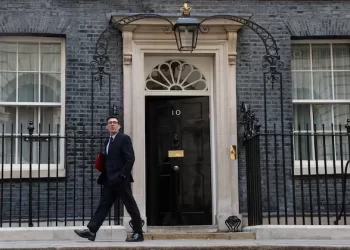

Several former military personnel say that despite years of waiting, their immigration cases have been rejected by the British government without convincing reasons, and they are now living in a state of uncertainty in a number of neighboring countries. They are calling on the British government to reconsider its decisions regarding those who fought alongside British forces in Afghanistan against terrorism. These former military personnel stress that they are seeking justice, transparency, and a fair review of the process for examining applications under this program. In a published letter, these former military personnel have seriously urged the British government to review this program and handle applicants’ cases fairly.
Part of the letter from these former military personnel reads: “We are a group of applicants to the Afghan Relocations and Assistance Policy (ARAP); former Afghanistan military personnel from specific units of the police, the National Army, National Security, and other security forces who served for years alongside British forces in joint operations. We risked our lives to carry out these missions, fought side by side with British forces, took part in joint operations, and carried out our responsibilities with full commitment. Today, because of that very cooperation, many of our family members and we face serious security threats.”
These former military personnel say that despite this record, many of their applications have been rejected after years of waiting, citing repetitive and formulaic reasons. According to them, some applicants have waited more than three years for a final decision, but in the end received only a short letter stating that their application had been rejected, without any clear explanation as to the insufficiency of the documents and evidence submitted or the reasons behind the decision.
The letter states: “One of the common reasons given in rejection letters is that we were not directly employed by the British government. But we were Afghanistan’s military personnel, not civilian employees or private contractors with direct employment contracts with the British government. Our cooperation took place within the framework of joint military operations, and this fact can be proven through existing documents and records.”
These former military personnel say they possess all the documents and records related to their period of service, including service records, documentation of cooperation, and evidence of participation in missions and joint operations. According to them, copies of the rejection letters sent to members of this group are also available, showing that many applicants have faced rejection with nearly identical wording and reasoning.
The letter states: “Today, our lives are spent in uncertainty and fear. Every day, we live in fear of arrest, retaliation, or harassment by the Taliban, and an uncertain future lies ahead for our families and us. We are not seeking special privileges; our only request is that our cases be reviewed fairly, transparently, and independently, based on the facts, evidence, and documents available.”
Applicants to the resettlement program for former colleagues of British forces have called on the British government, the media, and human rights organizations to hear their voices and to begin the process of reviewing all their cases. These former military personnel have stressed that the British government must honor its commitments to those who served alongside its forces for years.
One former serviceman says, “I have an ARAP case and have now been waiting for four to five years. Every so often, I receive emails from various people, but to this day,y no final confirmation email has been sent to me. Despite having valid documents and meeting all the requirements, my case still has not been approved.”
Another former serviceman says: “I ask the British government to carefully review my case and application for approval. I am not the only one waiting every night for a response; thousands of others are in the same situation, anxiously awaiting a final decision. All of us were members of the 999 ATF unit under the former Republic system of Afghanistan, and we hope our cases will be addressed as soon as possible.”
Another former serviceman, who was wounded during the war against terrorism while serving alongside British forces, says: “I myself am wounded. Six years ago, during one of the counterterrorism operations in Afghanistan, I was wounded in the neck, and my T1 vertebra suffered severe damage. At Bagram Hospital in Afghanistan, American doctors operated on my neck, and by the grace of God Almighty, I survived; but now I am unable to walk. I am in a difficult health and economic situation in Iran. My hope rested first in God and then in the ARAP program. But the ARAP program rejected my application and closed my case.”
Another serviceman says: “I was a former officer of the National Army of Afghanistan and served in the intelligence department of the Ministry of Defense as head of counterintelligence. My duty was a sensitive security responsibility that included gathering and analyzing information, identifying threats, cooperating with intelligence, and ensuring the security of Afghan and international forces. During my service, I was active within the framework of military cooperation between Afghanistan and international forces, including British forces. I was also in working contact with British military mentors (UK ETS Mentors) and intelligence officers of international forces, and I cooperated on security matters and threat assessments.”
This former military officer adds: “In 2022, I applied to the ARAP program. My application was rejected in early 2023. After requesting a review and submitting additional documents, in 2026, my application was rejected again,n and my case was declared closed. Despite submitting documents related to my service record, sensitive intelligence duties, security cooperation, evidence related to threats, and my working relationship with international forces, the main reason given for rejecting my case was that I had not been directly employed by the British government.”
This comes as the British government had announced that the Afghan Relocations and Assistance Policy (ARAP) program was designed for those citizens of Afghanistan who worked in that country for the British government, or in cooperation with it, in sensitive or important roles. According to the British government, this program may include an offer of resettlement in Britain for individuals deemed eligible by the Ministry of Defence (MoD) and also assessed as suitable for resettlement by the Home Office.
Under this program, citizens of Afghanistan found eligible for resettlement in Britain through this route may relocate to Britain along with their spouse, dependent children, and other family members (AFM) who are likewise deemed eligible by the Ministry of Defence and assessed as suitable for resettlement by the Home Office.
This scheme began in April 2021, and the acceptance of new applications under it ended on July 1, 2025. This scheme replaced the previous Intimidation Policy (which was in effect from 2010 to 2013) and the Ex-Gratia Scheme (EGS), which was active from 2013 until November 30, 2022.
The British government has said that all ARAP applications received before the program’s deadline of July 1, 2025, will be processed; however, after this date, no new principal applications will be accepted.
For individuals found eligible, it will still be possible to review the resettlement status of immediate family members (IFM), including spouses and children under 18. In addition, after accepting an ARAP offer, they will have 30 days to apply for the resettlement of other family members (AFM) in Britain. However, once this scheme is closed, no new applications will be accepted.
You can read the Persian version of this report here:
همکاران پیشین بریتانیا در افغانستان: پروندههای اسکان مجدد عادلانه بررسی شود