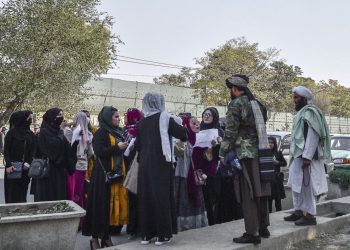
In recent days, news has surfaced about the Taliban warning the Hazara residents of the Gizab district in Uruzgan province, stating that if they do not pay 15 million Afghanis to the Pashtuns within the next two months, they must abandon their homes and lands. This comes after they had already paid 15 million Afghanis earlier this year on 31, July, and now the Taliban have ordered them to pay an additional 15 million Afghanis within the next two months. According to media reports, the conflict is over the ownership of 700 acres of agricultural land, which the nomads, with the Taliban’s support, claim ownership of despite lacking any documentation. However, the Hazaras, who have owned the land for decades, claim that they have been forced by the Taliban to repurchase their land. This is one instance of a situation where the Taliban, as part of their strategy, impose such conditions on a segment of the Afghan population to alter the demographic composition in specific areas of the country to favor a particular ethnic group.
There are clear examples of this strategy being enforced by the Taliban. As soon as they regained power, one of their first actions was the forced displacement of residents from specific areas. Instances of this were reported in the provinces of Ghazni, Daikundi, Panjshir, and Takhar. What happened in Daikundi appeared particularly brutal. Women and children were forcibly evicted from their homes and made to take refuge in the mountains. Reports surfaced of these women and children enduring the harsh winter cold in the mountains. Such inhumane treatment of a country’s citizens seems unprecedented globally. No government anywhere else displays such inhuman behavior. These mass displacements are carried out under the threat of armed force.
In addition to this, fictitious and baseless disputes are instigated with the Taliban’s support, typically involving claimants who are friends or relatives of the Taliban, while the defendants are invariably Hazaras. In every case, without exception, the Hazaras are the ones who are beaten and extorted for tens of millions of Afghanis to buy a few days of respite. In these fabricated disputes, cases dating back several decades are brought up, and the Taliban courts invariably find the Hazaras guilty, forcing them to pay for these historical disputes. For example, in the first year of Taliban rule, a man claimed that part of his herd had been stolen by several residents of the Malistan district in Ghazni province 31 years earlier. The Taliban immediately declared all Hazaras in the Malistan district, without distinction, guilty and ordered them to pay the claimant nearly seven million Afghanis. People protested at the time but were met with Taliban guns and ultimately paid the sum. Since then, similar incidents have repeatedly occurred in Hazara-populated districts of Ghazni and other provinces. The fact that the claimants are always from the Taliban’s ethnic group and the defendants are Hazaras, who are invariably found guilty and made to pay, indicates that these disputes are a form of pressure exerted by the Taliban on a segment of the population to force them to leave their areas and thus alter the country’s demographic composition.
Changing the demographic composition is one of the racist and inhumane policies pursued by several rulers in contemporary Afghanistan. However, the Taliban enforce it under different pretexts, such as land disputes, while using guns and clubs. But why are the Taliban interested in changing the demographic composition? Undoubtedly, the Taliban do not represent any ethnic group and are not the representatives of any ethnicity, but they strive to make interactions in the country more ethnic-based to garner support from certain ethnic groups. To this end, they oppress specific ethnic groups to win the favor of others. This racist and inhumane goal, if achieved, would mark another dark chapter in the contemporary history of Afghanistan and the world.
Another reason for the Taliban’s interest in changing the demographic composition is their fear of certain ethnic groups. Because the Taliban act ethnically and oppress specific ethnic groups more, they fear the concentration of these groups in sensitive and strategic areas. Hence, they have adopted various strategies to prevent this perceived threat from materializing. Part of this strategy involves seizing people’s lands and constructing settlements. For instance, in Ghazni province, the Taliban have seized lands in Hazara-populated areas and have so far built two settlements under the pretext of accommodating refugees and the families of their slain members, where not a single Hazara can reside. According to reports from the Hasht-e Subh Daily, these settlements are built with the support of the Haqqani network to house members of Al-Qaeda and Tehrik-i-Taliban Pakistan (TTP). Undoubtedly, housing these groups will alter the social fabric of these areas.
Fictitious disputes, often initiated by the nomads with the Taliban’s support, also serve this purpose. Political and economic pressures are exerted on people to force them to leave their homes. A documentary released last year from the Shashpar area of Gizab district in Uruzgan province showed unidentified individuals cutting down people’s trees, setting their homes, cars, and crops on fire, and looting their shops and houses. Yet, no one has been arrested, and the Taliban’s prosecutors and courts have not pursued the cases. Additionally, there have been a series of killings in Uruzgan, with 21 people from one area killed since the Taliban came to power. The most recent case was the murder of Rustam Rahimi, the imam of the Shashpar mosque in Gizab district. If the Taliban were not intent on exerting pressure on a specific ethnic group, they would have identified and arrested the perpetrators in at least one of these 21 murders, but this has not happened. Instead, they have arrested and imprisoned eight individuals they claim reported Rustam Rahimi’s murder to the media. The Taliban expect people to die in complete silence, pay extortion, and abandon their homes.
You can read the Persian version of this analysis here:
زورگیری و کوچ اجباری؛ استراتژی تغییر بافت جمعیتی | روزنامه ۸صبح