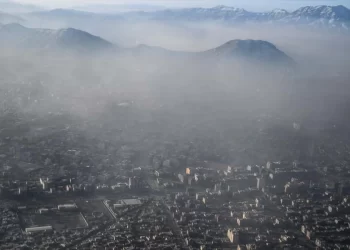
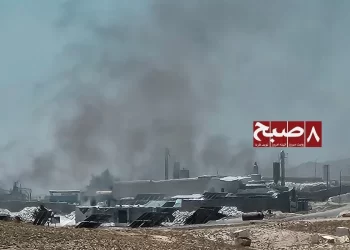
Residents across Ghazni province speak with deep worry about the industrial factories operating inside their neighborhoods. They say the rapid spread and constant work of these factories have filled the air with poison and pushed many families into serious health problems. Those who live closest to the factories suffer the most and pay the highest price with their health.
Residents of Ghazni told the Hasht-e Subh Daily that factory owners burn poor-quality fuel and face no monitoring at all. They say these factories should be forced to install systems that clean the smoke, yet the Taliban issue no warnings and take no action. The people believe that the Taliban have failed to control the causes of air pollution in the province. Because of this failure, the environment grows worse with each passing day.
Mohammad Matin, who lives in the Bakawal area of Ghazni, watches the growing number of factories with frustration and fear. He says most of them burn low-quality fuel and have turned daily life into a constant struggle for the people around them.
He says, “Powerful figures built many of these factories during the Republic era, and no one ever stopped them. Their smoke has poisoned our air so badly that every breath feels toxic. We have fallen sick many times and had to seek medical help.” He explains that poverty has made things even worse. People now burn clothes, plastic, rubber, and anything they can find just to stay warm, which adds more smoke to the already dirty air.
Sayed Rajab, another resident of the area, watches his children struggle to breathe. He says the polluted air from nearby gypsum factories has caused serious breathing problems for them. He cannot afford to buy another home or leave the area, so he feels trapped. With frustration and fear, he asks the Taliban to shut these factories down immediately.
“Our house stands only a short distance from a gypsum factory,” he says. “Every day, my children fall sick and fight for breath. Who should we turn to? Who will listen to the cries of poor and helpless people like us? Factories should never exist inside residential areas. They must be built far away because they have no filtration systems and no supervision. The authorities must take serious action before it is too late.”
As winter approaches, he fears the situation will grow even worse. Cold weather always traps the smoke in the air, turning the city into a cloud of poison. He urges the Taliban to take urgent steps to prevent another season of suffering.
In the Bakawal, Shahark, Kalal, and Laghari areas, several factories now produce gypsum, bricks, and pottery. Residents say none of them use smoke filtration systems. Thick clouds of smoke hang over these neighborhoods day and night. The people demand immediate solutions before more lives are damaged.
Sajida, a resident of the Shaharka area, says the smoke and foul smells from the factories have invaded every part of her life. She explains that poverty forces many families to burn dirty and dangerous fuels. Most people do not realize how toxic these materials are or how deeply they harm the environment and human health.
She says, “Families burn firewood, coal, and plastic to heat their homes and bathhouses because gas and fuel prices have become too high. No one controls the prices. The air is heavy and painful to breathe. One week ago, my sister’s little child began to struggle for air. The child is now in the hospital, fighting to recover.”
Sakina, who lives in the Kalal area, believes factory owners must promise to stop using poor-quality fuel if they truly care about human life. She says industrial parks should be built far from residential neighborhoods. In her view, children and elderly people suffer the most in this poisoned air.
She says, “Most of the smoke comes from bathhouses and small workshops. In the past, our area had clean air, and we breathed easily. Trees once cooled the air and purified it, but now most of them have dried up. Their power is gone, and the air has turned foul. The bad smell gives us constant headaches. At first, people did not think about the consequences and allowed these factories to grow. Now the problem has grown so large that it threatens everyone’s life. The community must stand together and take action. These factories must stop their work as soon as possible. If not, the lungs of everyone living nearby will slowly be destroyed.”
She also calls on the media and mosque imams to teach people about the dangers of fossil fuels and toxic materials, so they stop burning whatever they can find.
Air pollution has become one of the most serious problems in winter across many cities in Afghanistan. According to the Ghazni Department of Industry and Trade, alongside large industrial factories, about 200 brick kilns and confectionery factories operate in Nawabad, Qala-e-Shada, Bakawal, Shahark-e Shahrestan, Tawhidabad, and Arezu.
Earlier, the United Nations Human Settlements Programme (UN-Habitat) warned that Afghanistan’s cities face a dangerous air pollution crisis. The agency said that smoke from vehicles and factories, combined with winter smoke from burning coal and plastic, puts public health at serious risk.
UN-Habitat stated that it promotes clean energy, public transportation, and green spaces to help reduce these dangers and protect people’s lives and health.
Every year, as winter returns and the use of fossil fuels increases, people across the country once again raise their voices to complain about choking air and the many problems it brings.
You can read the Persian version of this report here:
ساخت کارخانهها در میان خانهها؛ آلودهگی هوا زندهگی باشندهگان غزنی را تهدید میکند