
Coinciding with the fifth anniversary of the fall of Afghanistan to the Taliban, Human Rights Watch (HRW) has released a new report stating that Afghanistan has witnessed one of the most severe human rights crises in the world over the past five years, and that Taliban policies have systematically violated the fundamental rights of women, girls, and other vulnerable groups. The organization has also published a timeline of events from the past five years, expressing concern over the expansion of repression, the deepening humanitarian crisis, and the absence of accountability for widespread human rights violations.
The report states that with the Taliban’s entry into Kabul on August 15, 2021, Afghanistan’s political and social structure was rapidly transformed. According to the report, thousands of citizens rushed to Kabul airport in an attempt to leave the country, amid growing fears of Taliban reprisals against former government employees, security forces, journalists, civil society activists, human rights defenders, and women who had worked in government institutions. According to HRW, the Taliban’s promise of a “general amnesty” was soon discredited by reports of house-to-house searches, arbitrary detentions, and revenge killings.
Documenting Revenge Killings and Restrictions on the Media
HRW says that following the Taliban’s takeover, it documented instances of extrajudicial executions and enforced disappearances of former government security forces in several Afghanistan’s provinces of Afghanistan. The organization emphasizes that these actions contradicted the Taliban’s initial commitments to ensure the security and safety of opponents of the former government.
The organization stated that between August 15 and October 31, 2021, alone, it documented the killing or disappearance of 47 former members of the Afghan National Security Forces (ANSF), including army, police, intelligence, and local police personnel, who had either surrendered to the Taliban or been detained by them following the takeover. HRW also said it had gathered credible information on more than 100 killings in Ghazni, Helmand, Kandahar, and Kunduz provinces alone.
The report also addresses the state of the media, saying that the Taliban have imposed sweeping restrictions on independent media outlets since the earliest days of their rule. According to the report, journalists have faced arrest, beatings, and threats, hundreds of media outlets have ceased operations, and many journalists have been forced to leave the country or abandon the profession altogether. Women journalists have been disproportionately affected by these restrictions, with their presence banned or restricted at a number of media outlets. As civic space has continued to shrink, conditions for independent reporting have grown increasingly difficult.
Girls’ Education and the Suppression of Women’s Protests
One of the central themes of the report is the ban on girls’ education beyond the sixth grade, a decision the Taliban implemented in March 2022. HRW describes this measure as depriving an entire generation of the right to education, and emphasizes that Afghanistan remains the only country in the world that bars girls from continuing their education beyond that level.
Elsewhere in the report, it states that women protesters in Kabul, Herat, Bamiyan, and other provinces have continued their demonstrations despite security pressures. However, Taliban forces have responded to these protests with arbitrary detentions, violence, torture, threats, and forced confessions. According to HRW, the slogan “bread, work, freedom” has become a symbol of the protests by women in Afghanistan.
Crimes Against Humanity Rooted in Gender Persecution
HRW says Taliban authorities have implemented a range of laws, decrees, and practices that deliberately deprive women and girls of fundamental rights based on their gender. The organization concludes that this widespread and systematic deprivation of human rights amounts to a crime against humanity based on gender persecution.
The report notes that the Taliban’s Law for the Propagation of Virtue and Prevention of Vice, passed in August 2024, has institutionalized restrictions on women’s movement, dress, freedom of expression, employment, and social presence. It also states that the Taliban’s “Code of Criminal Procedure,” according to HRW, has further entrenched grounds for discrimination and repression.
HRW’s report notes that on July 8, 2025, the International Criminal Court (ICC) issued arrest warrants for two senior Taliban officials on charges of committing crimes against humanity based on gender persecution against women, girls, and individuals of non-binary gender.
Humanitarian Crisis and the Collapse of Public Services
HRW also describes Afghanistan’s humanitarian situation as alarming. According to the report, declining international aid, economic collapse, and Taliban restrictions on women’s work in aid organizations have made it more difficult for millions of people to access humanitarian assistance.
The organization said that more than 17 million people, nearly 40 percent of Afghanistan’s population, face severe food insecurity, and that the United Nations humanitarian response plan is facing serious funding shortfalls. At the same time, restrictions imposed on female aid workers have made it more difficult to deliver services to women and girls.
The report also addresses the crisis in Afghanistan’s health system, saying that reduced funding and Taliban restrictions have led to shortages of medicine, medical equipment, and female health workers. The organization believes that the continued ban on women’s education in medical fields could further limit women’s access to healthcare services in the coming years.
One of the clearest consequences of the economic collapse, reduced foreign aid, and Taliban restrictions is the crisis in Afghanistan’s health services. Due to budget cuts, many health centers lack adequate access to essential medicines and medical equipment. For families struggling to meet basic living needs, the cost of medicine has become a difficult choice between treatment and survival.
HRW says that since August 2021, women and girls in most of Afghanistan’s provinces have faced greater restrictions and difficulties in accessing health services. According to the report, they are required to be accompanied by a male chaperone when traveling, and only female health workers are permitted to examine them. At the same time, the Taliban have barred women from attending institutions that provide health training, a measure that could further worsen the shortage of female health workers in the future.
Targeting of Minorities and the LGBTQ Community
Elsewhere in its report, HRW states that members of Afghanistan’s LGBTQ community have faced increased threats, detention, violence, and harassment since the Taliban takeover. The organization also expressed concern over intensifying discrimination against religious minorities, particularly Shia Muslims, following the passage of new Taliban laws.
According to the report, the Taliban’s “Code of Criminal Procedure,” issued in January 2026, recognizes only followers of the Hanafi school of jurisprudence as Muslims, depriving other religious groups of many rights. HRW says the law has also narrowed the definition of domestic violence and reduced legal protections for women who are victims of abuse.
Executions and Enforced Disappearances of Individuals Accused of Militia Ties
Taliban forces have targeted, executed, or forcibly disappeared individuals accused by the group of ties to ISIS. According to the report, individuals detained by the Taliban on such charges have had no access to legal counsel or their families.
Forced Deportation of Migrants and Fears Over Return to Afghanistan
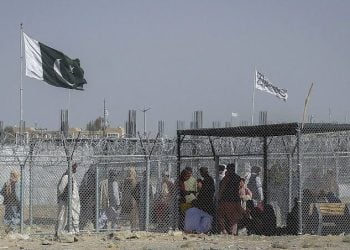
The report criticizes Iran, Pakistan, and Turkey for forcibly returning migrants, noting that millions of Afghan citizens have been forced to return to the country in recent years. The report also references Germany’s efforts to resume deportations of Afghan citizens and the European Union’s talks with the Taliban on migration-related issues.
HRW has warned that many returnees, including women, journalists, human rights defenders, former government employees, members of religious minorities, and the LGBTQ community, will face the risk of persecution, detention, torture, and other serious human rights violations if they return to Afghanistan.
Calls for International Accountability
The organization’s report also cites recent actions by international bodies. According to HRW, the International Criminal Court issued arrest warrants in July 2025 for two senior Taliban officials on charges of committing crimes against humanity based on gender persecution. Additionally, the UN Human Rights Council (UNHRC) established an independent mechanism in October 2025 to investigate human rights violations in Afghanistan.
Fereshta Abbasi, HRW’s Afghanistan researcher, said the past five years have shown that impunity has fueled the escalation of human rights violations in Afghanistan. She added that the international community must move beyond expressing concern and take concrete action to ensure justice, halt the forced deportation of Afghan asylum seekers, and continue humanitarian assistance to Afghanistan.
You can read the Persian version of this report here:
گزارش دیدهبان حقوق بشر؛ تداوم جنایت علیه بشریت و وخامت وضعیت حقوق بشر در افغانستان