• 8AM.MEDIA
  • ویب‌سایت فارسی
  • پښتو ویب‌پاڼه
  • اۉزبېکچه ویب‌سایت
  • Podcast
Sunday, October 4, 2026
Hasht-e Subh
  • Home
  • News
    • Afghanistan News
    • World News
  • Opinion
    • Editorial
    • Analysis
  • Reports
    • Daily Reports
    • Investigative Reports
  • Society
    • The story of people
  • Women’s Word
  • Columns
    • Three Years After Afghanistan’s Fall: The Taliban’s Resurgence
    • Towards Equality
    • The Resurgence of the Taliban: Two Years Since Afghanistan’s Fall
    • Hebatullah Report Special Edition
    • Resistance for Education Special Edition
    • Special Column on Taliban’s Education Curriculum
    • Nawroz
  • Interviews
  • Contact Us
    • About Us
    • 8AM MEDIA Annual Awards
    • Submit an Article to Hasht-e-Subh
  • 8am.mediaBack
Subscribe
No Result
View All Result
  • Home
  • News
    • Afghanistan News
    • World News
  • Opinion
    • Editorial
    • Analysis
  • Reports
    • Daily Reports
    • Investigative Reports
  • Society
    • The story of people
  • Women’s Word
  • Columns
    • Three Years After Afghanistan’s Fall: The Taliban’s Resurgence
    • Towards Equality
    • The Resurgence of the Taliban: Two Years Since Afghanistan’s Fall
    • Hebatullah Report Special Edition
    • Resistance for Education Special Edition
    • Special Column on Taliban’s Education Curriculum
    • Nawroz
  • Interviews
  • Contact Us
    • About Us
    • 8AM MEDIA Annual Awards
    • Submit an Article to Hasht-e-Subh
  • 8am.mediaBack
No Result
View All Result
Hasht-e Subh
No Result
View All Result

Taliban Opponents in Tehran: Beginning of a New Process or Just an Exception?

Translated by Farhad Farhaad | Originally reported in Persian by Kiomars Samadi

Mohammad Farhaad Mohammad Farhaad
6 July 2026 - Solar Hijri Date: 1405/04/15 [t_time:1783351922]
Ahmad Massoud, Mohammad Mohaqiq and other Taliban opponents stand alongside Taliban officials at the Tehran funeral ceremony for Iran's late president. (Photo credit: Social Media)

Social Media


The simultaneous presence of Taliban and anti-Taliban delegations at the funeral ceremony of the Islamic Republic’s leader created one of the most distinctive political scenes in Afghanistan over the past nearly five years. The funeral ceremony will end sooner or later, but the question that remains unanswered carries far greater weight: will this unexpected event remain confined to that single scene, or will it also mark the beginning of a shift in how the Taliban’s opponents relate to regional governments, and specifically to the Islamic Republic?

Over the past nearly five years, Western and regional governments have followed one reality in dealing with Afghanistan: that political power rests exclusively with the Taliban, and engagement with the group is unavoidable. Of course, the Taliban’s opponents have occasionally held gatherings in certain countries themselves, or have been invited by various institutions, but in practice they have held no particular place in the diplomacy of regional governments. Now, the simultaneous invitation extended to a Taliban delegation, and figures such as Ahmad Massoud and Mohammad Mohaqiq have, at the very least, moved the Taliban’s opponents out of a position of complete marginalization. Yes, it cannot yet be said that the Islamic Republic is seeking to support the Taliban’s opponents, but it can be said that, for the first time since the Taliban’s return to power, the assumption that Afghanistan can only be discussed through a single address has been called into question. Indeed, the mere coincidence of presence at the funeral ceremony is not, in itself, a serious challenge to the Taliban regime, but it carries a message: that the complete removal of the opposition from regional calculations may not be as settled a matter as it has been assumed to be in recent years.

If this reading is correct, its implications could extend well beyond Iran, in the sense that other countries as well might conclude that maintaining a relationship with the Taliban does not necessarily mean disregarding the group’s opponents. In that case, inviting opposition figures to meetings, conferences, and other official occasions would no longer be seen as an unusual move. Should such a trend take shape, it would, to some extent,t reduce the political isolation of the opposition, even if it does not amount to formal support for them.

At the same time, this development could also push relations within the Taliban opposition itself into a new phase. For nearly the past five years, they have been caught up in internal disputes more than in rivalry with the Taliban. Now, if the door of certain regional countries reopens to part of this opposition, the question of who truly represents Afghanistan’s opposition will resurface. Will all factions have a share in this process, or will only a few well-known figures emerge as the main players? The experience of past years has shown that rivalry over representation has, at times, worn down the opposition more than its rivalry with the Taliban has. If the trip to Tehran results in Massoud and Mohaqiq receiving greater attention from regional governments, other opposition figures may come to feel excluded from the equation, a feeling that could affect the cohesion of the opposition.

On the other hand, the presence of Taliban opponents in Tehran could also break a long-standing taboo: avoiding closeness with the Islamic Republic and Pakistan. In the prevailing view among Taliban opponents, closeness to neighboring countries, particularly Iran and Pakistan, has for more than twenty years been treated with particular sensitivity. Some regard any relationship with these countries as a sign of “dependency” or even “servitude,” whereas the same level of engagement with Western countries is usually welcomed as a “diplomatic success.” The presence of Massoud and Mohaqiq in Tehran inevitably challenged this double standard. It remains to be seen whether the presence of these two figures in Tehran marks the beginning of a more realistic approach by the opposition toward regional diplomacy, or whether it is merely an exception that will once again reproduce the same old sensitivities.

Another variable that should not be overlooked is the future of relations between Iran and the United States. If tensions between Tehran and Washington continue, some of the Taliban’s opponents may continue to avoid closeness with Iran to preserve their standing with the West. But if the two countries move toward reducing tensions, these calculations will change as well. In that case, engagement with Tehran would no longer necessarily mean distancing from the West, and opponents could accept invitations from regional countries with greater freedom of action, without worrying that every foreign trip would associate them with a particular political axis.

But the central question remains unanswered: was this invitation merely a one-off consideration, or should it be seen as a sign of a new Iranian approach toward the Taliban’s opponents? The answer to this question lies not in the photographs of the funeral ceremony, but in the behavior of Iran, the Taliban, and the Taliban’s opponents in the months ahead. If the Islamic Republic’s engagement with the Taliban’s opponents continues, then one could speak of the beginning of a new process. But if everything remains confined to that single moment of presence at the funeral ceremony, then what should be discussed is not a process but an exception. And if it is an exception, the Taliban will remain the Islamic Republic’s principal partner, and the Taliban’s opponents will return to the position they held before the funeral ceremony.


You can read the Persian version of this analysis here:

حضور مخالفان طالبان در تهران؛ آغاز یک روند یا فقط یک استثنا؟
ShareTweetSendSendShare

Related Posts

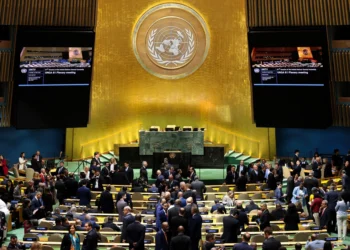
Delegates and diplomats gather in the United Nations General Assembly Hall in New York ahead of a plenary meeting of the 81st session. (Photo credit: Michael M. Santiago/Getty Images)
Analysis

Afghanistan’s Empty Seat at the Annual UN General Assembly

24 September 2026 [t_time:1790270790]
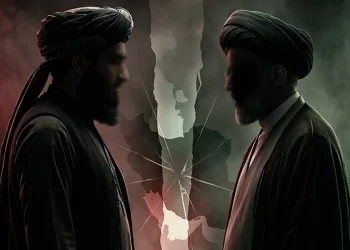
A turbaned man and an Iranian cleric face each other before a cracked map, reflecting Iran's dilemma over the Taliban and the Shia. (Photo credit: AI)
Analysis

The Taliban and the Shia: Iran Caught in a Bind Over Its Stance

21 September 2026 [t_time:1790016658]
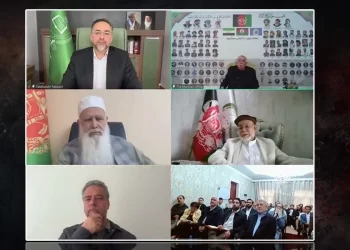
Anti-Taliban figures and supporters take part in a virtual meeting marking the anniversary of Ahmad Shah Massoud's assassination. (Photo credit: Afghanistan International)
Analysis

Virtual Meetings, Virtual Warnings: How Long Will the Taliban Opposition’s Cycle Continue?

15 September 2026 [t_time:1789498076]

Latest

Loading latest news...

Popular stories

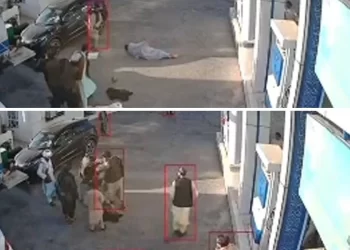
  • Surveillance footage shows Taliban fighters surrounding and shooting a bound man in Herat. (Photo credit: Social Media)

    Taliban Shoot Young Man from Herat After Torturing Him with Hands Tied

    Share
    Share Tweet
  • UN Report Reveals Shifts in Family Attitudes and Rise in Domestic Violence in Afghanistan

    Share
    Share Tweet
  • Al-Qaeda Releases Hamza bin Laden Message on 9/11 Anniversary

    Share
    Share Tweet
  • Afghanistan Journalists Center: Taliban Have Detained Around 300 Journalists and Media Workers

    Share
    Share Tweet
  • Freedom Front Claims 37 Taliban Fighters Killed in Nuristan and Kunar

    Share
    Share Tweet

Podcast

Insights
Insights

Join Lynne O’Donnell for 8AM’s podcast series, Insights.
Lynne talks with generals, diplomats, soldiers, journalists, politicians, activists, people who have front row seats for conflicts around the world, and citizens with a story to tell, happy or sad. For this first series, Afghanistan is the focus. Lynne and her guests talk about the collapse of the republic in August, 2021, and the impact since — for the people of Afghanistan, for the security of the region, for the safety of the world. It’s important, interesting and insightful.

Insights/22: Controlling the Narrative with Mina Sharif
byinsights8am

Controlling the Narrative

Lynne O’Donnell talks with Mina Sharif, author, activist, women’s rights campaigner, educator and mentor. They discuss who controls the narrative and who speaks for Afghanistan’s people when the Taliban appear to have seized control not only of the country but of the message, too.

Have a listen

Insights/22: Controlling the Narrative with Mina Sharif
Episode play icon
Insights/22: Controlling the Narrative with Mina Sharif
Episode Description
Episode play icon
Insights/21: Media Meltdown with Zahra Joya
Episode Description
Episode play icon
Insights/20: Terror Inc with Scott Richards
Episode Description
Episode play icon
Insights/19: Busting Stereotypes with Bushra Gohar
Episode Description
Episode play icon
Insights/18: Media Matters with Waliullah Rahmani
Episode Description
Episode play icon
Insights/17: What Goes Around Comes Around with Sima Samar
Episode Description
Search Results placeholder
Hasht-e Subh

8AM Media, also known as Hasht-e-Subh Daily, stands as Afghanistan's premier independent and non-profit newspaper, resonating as a beacon of journalistic integrity since its establishment in June 2007 by esteemed Afghan journalists and human rights advocates. With a steadfast commitment to citizen journalism and civic education, Hasht-e-Subh Daily has earned its place as the most esteemed publication in the nation.

Publisher: Sanjar Sohail
Email: [email protected]
Executive Director: Parwiz Kawa
Email: [email protected]

Read More

Mecca Agreement vs. the Taliban, India and Israel: Is a New Regional Alignment Taking Shape?

UN: Unexploded Ordnance Poses Serious Threat in Kunduz Province

Brutal Killing of Nooria in Ghor: Woman Tortured and Killed in Front of Her Children

Pakistan Airstrikes Intensify as People in Helmand, Kandahar Build Underground Shelters

Red Cross Assists More Than 105,000 People with Disabilities in Afghanistan

Editor’s Choice

Every Saturday morning, 8AM MEDIA English Services Department will guide you through the week’s biggest stories from Afghanistan and the international community.

Subscribe

© 2026 - ©Hasht-e Subh Daily

No Result
View All Result
8am.Media
پښتو ویب‌پاڼه
ویب‌سایت فارسی
اۉزبېکچه ویب‌سایت
  • Home
  • News
    • Afghanistan News
    • World News
  • Opinion
    • Editorial
    • Analysis
  • Reports
    • Daily Reports
    • Investigative Reports
  • Society
    • The story of people
  • Women’s Word
  • Columns
    • Three Years After Afghanistan’s Fall: The Taliban’s Resurgence
    • Towards Equality
    • The Resurgence of the Taliban: Two Years Since Afghanistan’s Fall
    • Hebatullah Report Special Edition
    • Resistance for Education Special Edition
    • Special Column on Taliban’s Education Curriculum
    • Nawroz
  • Interviews
  • Contact Us
    • About Us
    • 8AM MEDIA Annual Awards
    • Submit an Article to Hasht-e-Subh
  • 8am.media

© 2026 - ©Hasht-e Subh Daily