• 8AM.MEDIA
  • ویب‌سایت فارسی
  • پښتو ویب‌پاڼه
  • اۉزبېکچه ویب‌سایت
  • Podcast
Sunday, September 13, 2026
Hasht-e Subh
  • Home
  • News
    • Afghanistan News
    • World News
  • Opinion
    • Editorial
    • Analysis
  • Reports
    • Daily Reports
    • Investigative Reports
  • Society
    • The story of people
  • Women’s Word
  • Columns
    • Three Years After Afghanistan’s Fall: The Taliban’s Resurgence
    • Towards Equality
    • The Resurgence of the Taliban: Two Years Since Afghanistan’s Fall
    • Hebatullah Report Special Edition
    • Resistance for Education Special Edition
    • Special Column on Taliban’s Education Curriculum
    • Nawroz
  • Interviews
  • Contact Us
    • About Us
    • 8AM MEDIA Annual Awards
    • Submit an Article to Hasht-e-Subh
  • 8am.mediaBack
Subscribe
No Result
View All Result
  • Home
  • News
    • Afghanistan News
    • World News
  • Opinion
    • Editorial
    • Analysis
  • Reports
    • Daily Reports
    • Investigative Reports
  • Society
    • The story of people
  • Women’s Word
  • Columns
    • Three Years After Afghanistan’s Fall: The Taliban’s Resurgence
    • Towards Equality
    • The Resurgence of the Taliban: Two Years Since Afghanistan’s Fall
    • Hebatullah Report Special Edition
    • Resistance for Education Special Edition
    • Special Column on Taliban’s Education Curriculum
    • Nawroz
  • Interviews
  • Contact Us
    • About Us
    • 8AM MEDIA Annual Awards
    • Submit an Article to Hasht-e-Subh
  • 8am.mediaBack
No Result
View All Result
Hasht-e Subh
No Result
View All Result

Women in Iran and Afghanistan: Resistance Versus Systematic Exclusion

Azada Hussaini Azada Hussaini
29 March 2026 - Solar Hijri Date: 1405/01/09 [t_time:1774801115]
Women stand in a queue under strict social constraints, reflecting the broader challenges facing women’s rights and public participation in Afghanistan. (Photo Credit: AFP)

AFP

In political discourses surrounding war, women’s rights are often presented as a justification for intervention. In these narratives, Muslim women are reduced to a simplified and uniform image, as if all are in the same situation and awaiting a single form of liberation.

Human rights activists also engage in these simplifications. Over the past two years, particularly around March 8, we have witnessed numerous events supporting the rights of women from Afghanistan and Iran, often drawing comparisons between their conditions. While this linkage is meaningful, it raises an important question: what exactly do these two groups of women have in common?

The reality is that Iranian and Afghan women live under very different circumstances.

For example, in terms of education, Iranian women make up about 60 percent of university students and hold the majority in many graduate and doctoral programs, especially in medicine and the sciences. In Afghanistan, however, the majority of women (74 percent) remain illiterate. Afghanistan is the only country in the world where girls and women are officially barred from secondary and higher education.

Fertility rates also differ markedly. Iranian women have one of the lowest fertility rates globally (fewer than two children per woman), while Afghan women have one of the highest (five children per woman). Beyond personal opinions on the matter, the practical implications are clear: one group of women has more time and opportunity for mobility, economic participation, and engagement in public life outside the home.

For those like me who have lived in Iran, Afghanistan, and Pakistan, these differences are obvious. During my childhood in Isfahan, I observed women fully and normally present in public spaces, which was always a positive sign of women’s agency. Seeing women driving, playing in the water, exercising, studying, attending mosques, and working was entirely normal. But as a teenager in Peshawar, and later as a working woman in Kabul, such options were unavailable to me. Although no law explicitly barred me, social norms made these paths difficult. Even mosques were practically male-dominated spaces.

Iran: A society ahead of the state

Iran’s legal system imposes numerous restrictions on women, such as in matters of divorce, inheritance, and testimony. Yet, it is also important to note areas where the state has provided tangible support that feminists in other countries, including the United States, have struggled to implement: more than six months of maternity leave in both the public and private sectors, flexible work arrangements, and universal access to healthcare and education.

More importantly, Iranian society itself has often moved ahead of the government. As surveys show, the majority of Iranians support women’s rights and individual freedoms. Iranian literature and cinema have long criticized gender injustices in the legal system.

Afghanistan: Fragile social foundations

The trajectory of women’s rights in Afghanistan has been entirely different. Feminism rarely emerged organically from society. Women’s rights have largely been used as a political tool by elites, from Amanullah Khan to the communists, the mujahideen, Western-backed governments, and now the Taliban. Each, from the top down, imposed its own image of the “ideal woman.”

I worked for a time in international development in Afghanistan. During the previous Western-backed government, gender mainstreaming was a condition for aid from American and European donors. These efforts produced tangible achievements: millions of girls attended school, women participated in literacy programs, maternal mortality declined, and international instruments such as the Convention on the Elimination of All Forms of Discrimination Against Women were adopted. Yet social norms do not change in two decades and remain a major barrier. In fact, the Taliban exploit the widespread perception that the women’s rights agenda is an imported Western ideology. They often justify restrictions on women by appealing to tribal customs.

Paths to equality

In my view, meaningful change in women’s conditions comes through education, economic opportunities, and shifts in public attitudes. Each of these goals requires time and careful planning.

Iranian women have made significant progress in literacy and education. Moreover, Iranian society broadly supports women’s freedoms and rights. As seen in the 2022 protests following the death of Mahsa Amini, not only women but also men actively participated. After these protests, a form of daily, passive resistance emerged, which sociologist Asef Bayat describes as “life as politics”: his theory suggests that ordinary daily actions can themselves become a form of political movement. Iranian youth normalize daily freedoms through clothing choices, social interactions, and persistent presence on platforms like TikTok. Iranian society has charted a path toward greater freedoms, though it remains unclear how the current war will affect this trajectory.

In Afghanistan, the challenge is not limited to the restrictions of the Taliban regime; it also involves the absence of a broader will to defend women’s rights. Over the past five years, women have largely stood alone in asserting their rights, with few men supporting them. Mobilizing internal support requires engaging men, particularly religious scholars and local leaders. I believe women’s rights activists can, alongside attending conferences and international forums, expand engagement and advocacy with scholars, religious figures, and Muslim authorities to foster more localized dialogue and greater social acceptance.

Abstract theoretical debates about the roles of women and men have often produced counterproductive results. What has proven effective is focusing on practical areas. Actions that can contribute to gradual and sustainable change include: emphasizing the need for female staff in healthcare; ensuring women have national ID cards to access public services and, in the long term, land and property ownership; providing access to smartphones as a means of receiving information; creating income-generating opportunities for widows; literacy and vocational training for economic participation; expanding models of home-based work; and applying technology in agriculture, the sector employing the largest share of women.

Today, Afghan and Iranian women are at different stages on the path to equality. In recent years, Iranian women have focused more on individual freedoms and strengthening personal agency, while Afghan women continue to face fundamental challenges in accessing basic services, participating in public life, and engaging in daily living. International support is important for advancing this path, but strengthening and mobilizing domestic programs and capacities play a more critical and sustainable role.

You can read the Persian version of this analysis here:
زنان افغان و ایرانی: تفاوت میان مقاومت و حذف شدن

ShareTweetSendSendShare

Related Posts

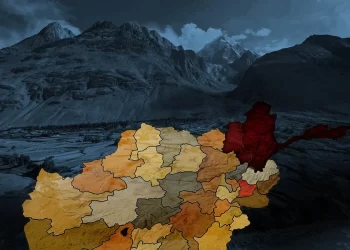
A shaded map highlights Badakhshan in Afghanistan's northeast against a backdrop of the region's rugged mountains. (Photo credit: Wikipedia)
Analysis

Badakhshan: From a Legacy of Resistance to a Role in Afghanistan’s Political Transition and the Building of an Inclusive National State

12 September 2026 [t_time:1789237315]
UN High Commissioner Volker Türk speaks as Afghan women ride in a vehicle amid escalating restrictions on their rights. (Photo credit: Reuters + AFP)
Daily Reports

Türk: Human Rights Violations in Afghanistan Institutionalized as Restrictions on Women Intensify

10 September 2026 [t_time:1789048947]
An illustration depicts Afghan elders standing before a fractured map of Afghanistan, symbolizing the country's deepening ethnic divides under Taliban rule. (Photo credit: AI)
Analysis

From Ethnic Power to Ethnic War

31 August 2026 [t_time:1788201841]

Latest

Loading latest news...

Popular stories

  • Hamza bin Laden - the son of Osama bin Laden (Photo: Social Media)

    Al-Qaeda Releases Hamza bin Laden Message on 9/11 Anniversary

    Share
    Share Tweet
  • Taliban Shoot Young Man from Herat After Torturing Him with Hands Tied

    Share
    Share Tweet
  • Sajjad Haider Khan: Those with Valid Visas Will Continue Their Studies in Pakistan

    Share
    Share Tweet
  • UN Women: Ban on Women’s Entry to UN Offices in Afghanistan Enters Second Year

    Share
    Share Tweet
  • Scholarship to Deportation: Pakistan Orders Mass Expulsion of Afghanistan Citizen Medical Students

    Share
    Share Tweet

Podcast

Insights
Insights

Join Lynne O’Donnell for 8AM’s podcast series, Insights.
Lynne talks with generals, diplomats, soldiers, journalists, politicians, activists, people who have front row seats for conflicts around the world, and citizens with a story to tell, happy or sad. For this first series, Afghanistan is the focus. Lynne and her guests talk about the collapse of the republic in August, 2021, and the impact since — for the people of Afghanistan, for the security of the region, for the safety of the world. It’s important, interesting and insightful.

Insights/22: Controlling the Narrative with Mina Sharif
byinsights8am

Controlling the Narrative

Lynne O’Donnell talks with Mina Sharif, author, activist, women’s rights campaigner, educator and mentor. They discuss who controls the narrative and who speaks for Afghanistan’s people when the Taliban appear to have seized control not only of the country but of the message, too.

Have a listen

Insights/22: Controlling the Narrative with Mina Sharif
Episode play icon
Insights/22: Controlling the Narrative with Mina Sharif
Episode Description
Episode play icon
Insights/21: Media Meltdown with Zahra Joya
Episode Description
Episode play icon
Insights/20: Terror Inc with Scott Richards
Episode Description
Episode play icon
Insights/19: Busting Stereotypes with Bushra Gohar
Episode Description
Episode play icon
Insights/18: Media Matters with Waliullah Rahmani
Episode Description
Episode play icon
Insights/17: What Goes Around Comes Around with Sima Samar
Episode Description
Search Results placeholder
Hasht-e Subh

8AM Media, also known as Hasht-e-Subh Daily, stands as Afghanistan's premier independent and non-profit newspaper, resonating as a beacon of journalistic integrity since its establishment in June 2007 by esteemed Afghan journalists and human rights advocates. With a steadfast commitment to citizen journalism and civic education, Hasht-e-Subh Daily has earned its place as the most esteemed publication in the nation.

Publisher: Sanjar Sohail
Email: [email protected]
Executive Director: Parwiz Kawa
Email: [email protected]

Read More

Under a Shadow of Despair: Threats That May One Day Cost Me My Life

Sources: Taliban Involved in Smuggling Goods from Pakistan Into Afghanistan

Taliban Official Marries 16-Year-Old Girl; Guests Protest Over Lack of Food

Khiam in Southern Lebanon Targeted in Major Israeli Explosion

Lebanese Sources Report Massive Explosion in Southern Lebanon

Editor’s Choice

Every Saturday morning, 8AM MEDIA English Services Department will guide you through the week’s biggest stories from Afghanistan and the international community.

Subscribe

© 2026 - ©Hasht-e Subh Daily

No Result
View All Result
8am.Media
پښتو ویب‌پاڼه
ویب‌سایت فارسی
اۉزبېکچه ویب‌سایت
  • Home
  • News
    • Afghanistan News
    • World News
  • Opinion
    • Editorial
    • Analysis
  • Reports
    • Daily Reports
    • Investigative Reports
  • Society
    • The story of people
  • Women’s Word
  • Columns
    • Three Years After Afghanistan’s Fall: The Taliban’s Resurgence
    • Towards Equality
    • The Resurgence of the Taliban: Two Years Since Afghanistan’s Fall
    • Hebatullah Report Special Edition
    • Resistance for Education Special Edition
    • Special Column on Taliban’s Education Curriculum
    • Nawroz
  • Interviews
  • Contact Us
    • About Us
    • 8AM MEDIA Annual Awards
    • Submit an Article to Hasht-e-Subh
  • 8am.media

© 2026 - ©Hasht-e Subh Daily