• 8AM.MEDIA
  • ویب‌سایت فارسی
  • پښتو ویب‌پاڼه
  • اۉزبېکچه ویب‌سایت
  • Podcast
Thursday, September 17, 2026
Hasht-e Subh
  • Home
  • News
    • Afghanistan News
    • World News
  • Opinion
    • Editorial
    • Analysis
  • Reports
    • Daily Reports
    • Investigative Reports
  • Society
    • The story of people
  • Women’s Word
  • Columns
    • Three Years After Afghanistan’s Fall: The Taliban’s Resurgence
    • Towards Equality
    • The Resurgence of the Taliban: Two Years Since Afghanistan’s Fall
    • Hebatullah Report Special Edition
    • Resistance for Education Special Edition
    • Special Column on Taliban’s Education Curriculum
    • Nawroz
  • Interviews
  • Contact Us
    • About Us
    • 8AM MEDIA Annual Awards
    • Submit an Article to Hasht-e-Subh
  • 8am.mediaBack
Subscribe
No Result
View All Result
  • Home
  • News
    • Afghanistan News
    • World News
  • Opinion
    • Editorial
    • Analysis
  • Reports
    • Daily Reports
    • Investigative Reports
  • Society
    • The story of people
  • Women’s Word
  • Columns
    • Three Years After Afghanistan’s Fall: The Taliban’s Resurgence
    • Towards Equality
    • The Resurgence of the Taliban: Two Years Since Afghanistan’s Fall
    • Hebatullah Report Special Edition
    • Resistance for Education Special Edition
    • Special Column on Taliban’s Education Curriculum
    • Nawroz
  • Interviews
  • Contact Us
    • About Us
    • 8AM MEDIA Annual Awards
    • Submit an Article to Hasht-e-Subh
  • 8am.mediaBack
No Result
View All Result
Hasht-e Subh
No Result
View All Result

Artificial Intelligence in Afghanistan’s Universities: A Helpful Tool or a Serious Threat to Thinking and Creativity?

Avizha Khorshid Avizha Khorshid
15 November 2025 - Solar Hijri Date: 1404/08/24 [t_time:1763219413]
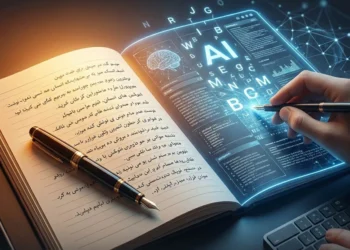
Artificial intelligence technologies displayed on smartphone and laptop, illustrating the growing integration of AI tools in educational and professional settings across Afghanistan's universities. (Photo Credit: Medium)

Medium

Several students and instructors say that the use of artificial intelligence in universities and academic centers in Afghanistan has increased. They consider the use of artificial intelligence beneficial and believe that this technology has made access to information and the conduct of research easier, but warn that continuous and excessive use of it leads to a decline in critical thinking, dependency on pre-generated information, weakened analytical skills, and poor writing abilities, reducing creativity and human capacities. In their view, artificial intelligence can be useful only if it is used as an auxiliary tool and if regulatory and ethical frameworks are defined for it so that it does not replace the effort and thinking of students.

Paiman Sadat, a student at Kabul University, says artificial intelligence (AI) has made many academic tasks significantly easier for students. He adds that this technology addresses almost 90 percent of a student’s educational needs, whereas previously writing a paper required hours of searching through books.

Sadat considers the use of artificial intelligence very helpful and explains: “Artificial intelligence accelerates learning and helps solve mathematical and physics problems. In many projects, this technology plays a major role, and if access to it is ever cut off, completing assignments will become very difficult for students.”

Maiwand, another student, emphasizing the drawbacks of artificial intelligence, says that excessive use of this tool can lead to severe dependency, reduced creativity, and weakened human abilities. He says, “At the moment, I have become heavily dependent on artificial intelligence to the point that without the internet and AI tools, I can neither study properly nor get my work done. This dependency worries me because I fear that my writing and analytical abilities will weaken, and continuous use of AI will take away my core skills.”

Bahar, a young woman who studies online at a university, affirms Maiwand’s remarks and says that although artificial intelligence has made access to resources easier than before and reduced the cost and time of learning, this convenience can result in mental laziness, excessive dependency on machines, and reduced human thinking capacity. She adds, “Artificial intelligence has undoubtedly provided many possibilities, but these conveniences weaken the ability to think, which is humanity’s greatest power. When a person relies on a machine for even the simplest issues, their ability to analyze, create, and think deeply gradually declines.”

Meanwhile, several university professors complain about students’ indiscriminate use of artificial intelligence in presenting research projects and the noticeable change in quality. They add that the absence of specific guidelines for using AI has enabled laziness and reduced the quality of education.

Zakir Sadat (pseudonym), a professor at Kabul University, says the lack of supervisory frameworks and proper mechanisms for using artificial intelligence in Afghanistan’s universities has created conditions for laziness, cheating, and the decline of educational quality. He adds that compared to previous years, essential student skills such as critical thinking, independent writing, and analysis have become weaker. In his view, using artificial intelligence as a supportive tool is an advantage, provided that ethical and regulatory frameworks are defined so that it does not replace student effort and thinking.

This university professor, referring to the excessive use of AI and the change in the quality of students’ work, says: “The change in the quality of students’ work is evident. In previous years, before the emergence of artificial intelligence, students’ work was usually the result of perseverance, genuine effort, and extensive study, but with the advent of AI and the shift from classical to modern teaching methods, although the appearance and structure of their work have improved, the scientific depth and originality of some assignments have decreased. For example, at times we have seen a student obtain an entire project from artificial intelligence and submit it.”

This comes as, in recent years, the use of artificial intelligence in Afghanistan has increased across most scientific, social, cultural, recreational, psychological, and advisory fields, as well as in universities, research centers, and scientific industries.

Earlier, the scientific journal Nature, in a study conducted by a group of researchers at the Swiss Federal Institute of Technology Zurich, reported that the behavior of 11 large language models, including “ChatGPT” and “Gemini,” had been evaluated in response to more than 11,000 questions. According to this study, these models in many cases reinforce users’ viewpoints and even overlook obvious errors.

Researchers have warned that this tendency in the use of artificial intelligence in the biological and medical sciences is dangerous, as it can lead to the repetition of incorrect hypotheses and flawed analyses, reduce scientific quality, and negatively affect academic research processes and specialized decision-making.

You can read the Persian version of this report here:

هوش مصنوعی در دانشگاه‌های افغانستان: ابزار کمکی یا تهدید جدی برای تفکر و خلاقیت؟
ShareTweetSendSendShare

Related Posts

Afghan students taking an exam in Pakistan. (Photo: DAWN)
Afghanistan News

Pakistan’s Human Rights Commission Condemns Decision to Expel Afghan Students

10 September 2026 [t_time:1789036411]
Hamid Karzai, former president of Afghanistan. (Photo: AP Photo/Rahmat Gul)
Afghanistan News

Karzai Calls for Reversal of Pakistan’s Decision to Expel Afghan Students

10 September 2026 [t_time:1789032551]
A 30-classroom school has been built by residents at a cost of AFN 20 million in Jaghori district of Ghazni Province. (Photo: Exclusive)
Afghanistan News

Ghazni Residents Build 20 Million-Afghani School

9 September 2026 [t_time:1788946391]

Latest

Loading latest news...

Popular stories

  • Hamza bin Laden - the son of Osama bin Laden (Photo: Social Media)

    Al-Qaeda Releases Hamza bin Laden Message on 9/11 Anniversary

    Share
    Share Tweet
  • Sajjad Haider Khan: Those with Valid Visas Will Continue Their Studies in Pakistan

    Share
    Share Tweet
  • UN Report Reveals Shifts in Family Attitudes and Rise in Domestic Violence in Afghanistan

    Share
    Share Tweet
  • Taliban Shoot Young Man from Herat After Torturing Him with Hands Tied

    Share
    Share Tweet
  • German Politician Calls for Faster Deportation of Undocumented Afghan Migrants

    Share
    Share Tweet

Podcast

Insights
Insights

Join Lynne O’Donnell for 8AM’s podcast series, Insights.
Lynne talks with generals, diplomats, soldiers, journalists, politicians, activists, people who have front row seats for conflicts around the world, and citizens with a story to tell, happy or sad. For this first series, Afghanistan is the focus. Lynne and her guests talk about the collapse of the republic in August, 2021, and the impact since — for the people of Afghanistan, for the security of the region, for the safety of the world. It’s important, interesting and insightful.

Insights/22: Controlling the Narrative with Mina Sharif
byinsights8am

Controlling the Narrative

Lynne O’Donnell talks with Mina Sharif, author, activist, women’s rights campaigner, educator and mentor. They discuss who controls the narrative and who speaks for Afghanistan’s people when the Taliban appear to have seized control not only of the country but of the message, too.

Have a listen

Insights/22: Controlling the Narrative with Mina Sharif
Episode play icon
Insights/22: Controlling the Narrative with Mina Sharif
Episode Description
Episode play icon
Insights/21: Media Meltdown with Zahra Joya
Episode Description
Episode play icon
Insights/20: Terror Inc with Scott Richards
Episode Description
Episode play icon
Insights/19: Busting Stereotypes with Bushra Gohar
Episode Description
Episode play icon
Insights/18: Media Matters with Waliullah Rahmani
Episode Description
Episode play icon
Insights/17: What Goes Around Comes Around with Sima Samar
Episode Description
Search Results placeholder
Hasht-e Subh

8AM Media, also known as Hasht-e-Subh Daily, stands as Afghanistan's premier independent and non-profit newspaper, resonating as a beacon of journalistic integrity since its establishment in June 2007 by esteemed Afghan journalists and human rights advocates. With a steadfast commitment to citizen journalism and civic education, Hasht-e-Subh Daily has earned its place as the most esteemed publication in the nation.

Publisher: Sanjar Sohail
Email: [email protected]
Executive Director: Parwiz Kawa
Email: [email protected]

Read More

The Rise of Germany’s Far-Right Party and What It Means for Afghanistan’s Asylum Seekers

UN Report: Taliban Continue Human Rights Violations and Restrictions Against Afghanistan Citizens

Travel Agency Fraud: Even the Companies Themselves Fall Victim to Forged Offers

The BRICS Summit: Where Does Afghanistan Stand on the Map of a Changing Global Economy?

Turkish and Qatari Intelligence Delegations in Kabul; Possible Meeting with Hibatullah in Kandahar

Editor’s Choice

Every Saturday morning, 8AM MEDIA English Services Department will guide you through the week’s biggest stories from Afghanistan and the international community.

Subscribe

© 2026 - ©Hasht-e Subh Daily

No Result
View All Result
8am.Media
پښتو ویب‌پاڼه
ویب‌سایت فارسی
اۉزبېکچه ویب‌سایت
  • Home
  • News
    • Afghanistan News
    • World News
  • Opinion
    • Editorial
    • Analysis
  • Reports
    • Daily Reports
    • Investigative Reports
  • Society
    • The story of people
  • Women’s Word
  • Columns
    • Three Years After Afghanistan’s Fall: The Taliban’s Resurgence
    • Towards Equality
    • The Resurgence of the Taliban: Two Years Since Afghanistan’s Fall
    • Hebatullah Report Special Edition
    • Resistance for Education Special Edition
    • Special Column on Taliban’s Education Curriculum
    • Nawroz
  • Interviews
  • Contact Us
    • About Us
    • 8AM MEDIA Annual Awards
    • Submit an Article to Hasht-e-Subh
  • 8am.media

© 2026 - ©Hasht-e Subh Daily