• 8AM.MEDIA
  • ویب‌سایت فارسی
  • پښتو ویب‌پاڼه
  • اۉزبېکچه ویب‌سایت
  • Podcast
Saturday, October 10, 2026
Hasht-e Subh
  • Home
  • News
    • Afghanistan News
    • World News
  • Opinion
    • Editorial
    • Analysis
  • Reports
    • Daily Reports
    • Investigative Reports
  • Society
    • The story of people
  • Women’s Word
  • Columns
    • Three Years After Afghanistan’s Fall: The Taliban’s Resurgence
    • Towards Equality
    • The Resurgence of the Taliban: Two Years Since Afghanistan’s Fall
    • Hebatullah Report Special Edition
    • Resistance for Education Special Edition
    • Special Column on Taliban’s Education Curriculum
    • Nawroz
  • Interviews
  • Contact Us
    • About Us
    • 8AM MEDIA Annual Awards
    • Submit an Article to Hasht-e-Subh
  • 8am.mediaBack
Subscribe
No Result
View All Result
  • Home
  • News
    • Afghanistan News
    • World News
  • Opinion
    • Editorial
    • Analysis
  • Reports
    • Daily Reports
    • Investigative Reports
  • Society
    • The story of people
  • Women’s Word
  • Columns
    • Three Years After Afghanistan’s Fall: The Taliban’s Resurgence
    • Towards Equality
    • The Resurgence of the Taliban: Two Years Since Afghanistan’s Fall
    • Hebatullah Report Special Edition
    • Resistance for Education Special Edition
    • Special Column on Taliban’s Education Curriculum
    • Nawroz
  • Interviews
  • Contact Us
    • About Us
    • 8AM MEDIA Annual Awards
    • Submit an Article to Hasht-e-Subh
  • 8am.mediaBack
No Result
View All Result
Hasht-e Subh
No Result
View All Result

Caught Between Joblessness and Insecurity, Young People Struggle Under Taliban Rule

Translated by Farhad Farhaad | Originally reported in Persian by Ilya

Mohammad Farhaad Mohammad Farhaad
3 February 2026 - Solar Hijri Date: 1404/11/14 [t_time:1770111565]
Jobless young men and children gather in a city street, reflecting deepening poverty and unemployment across the country. Photo Credit: Ali Khara/Reuters

Ali Khara/Reuters

Many young people working in Kabul say that after the Taliban returned to power, job insecurity sharply increased within non-governmental organizations. They explain that this insecurity, combined with fewer job opportunities, has placed constant pressure on their lives. Most of them work under temporary contracts and see no clear promise that their jobs will continue. Delayed salaries, sudden dismissals, and the financial dependence of institutions have only deepened their anxiety about work and survival.

In conversations with the Hasht-e Subh Daily, these young people say that the absence of job security forces them to stay in positions they do not like and never planned to keep. Fear of unemployment pushes them to accept tasks that damage their physical and mental health. They also believe that the Taliban’s Ministry of Labor and Social Affairs ranks among the least effective ministries under the group’s rule.

Alongside the unemployment crisis that has affected more than half of the qualified workforce in Afghanistan, job insecurity has become another daily struggle that workers continue to endure.

Farid is one of hundreds of young people in Kabul who start each workday with fear. He feels this fear because he has no clear contract and no certainty about his future. Each day, he wonders whether he will still have a job by evening or lose it tomorrow because of an abrupt decision by his employer. For him, job insecurity is not only about unemployment. It is also about the constant fear of sudden dismissal, the loss of income, and the heavy impact these worries have on both his work life and his personal life.

Farid says, “Even a small change in the institution’s budget or management could cost me my job. Limited funding and temporary contracts create the main source of job insecurity. In a few months, I will complete one year of work, and I worry that they will not renew my contract. This worry grows stronger as the end of the contract gets closer.” He adds that he has pushed himself beyond his limits to support his family and protect his job.

He continues: “To keep my job, I work more than I can handle. My unstable income and constant insecurity make me anxious about my future, because no one guarantees contract renewal, and job opportunities are scarce and highly competitive.”

Shayista, another young worker in Kabul, says that temporary projects, extra duties beyond job descriptions, sudden salary changes, and delayed or reduced pay have made job insecurity even worse for young people. She says: “Our salaries often arrive late, and no one guarantees that our jobs will continue. My contract lasts until 2029, yet I could still lose my job at any moment. One of my colleagues lost her position when her office faced a financial crisis, and she has now been unemployed for eight months. This reality is deeply worrying.”

Nabila, another young worker in Kabul, says that the Taliban have drastically limited job opportunities for women, making it extremely difficult for them to find work. She explains that even though few women remain in institutions, employers usually dismiss them first, which has intensified her fear.

Nabila says: “The Taliban have placed severe restrictions on women’s work. Women cannot work in many public or private institutions, and even in the few places where they find jobs, job security remains fragile. As a journalist, I face constant risk because contracts are short-term and project-based. Any budget cut could lead to my dismissal. Many media outlets have already laid off staff because of financial shortages, and this trend continues.”

At the same time, several legal experts say that the Taliban’s unfamiliarity with modern labor laws and 21st-century labor rights has created serious challenges for workers in Afghanistan and has made defending workers’ rights increasingly difficult.

Shahla Farid, a legal expert, says: “Under Taliban rule, job insecurity in Afghanistan has become more of a political and security issue than a legal one. The Taliban have damaged job security and placed many people in positions they do not deserve. While some individuals with higher education and doctoral degrees have strong skills and experience, others who studied only up to grades 9 or 12 now hold managerial, deputy minister, or director positions. In such an environment, real job security simply does not exist.”

Job security means feeling confident and stable in keeping one’s job without the constant fear of unemployment or sudden loss of income. It includes stable employment, reliable earnings, and a sense of future protection against economic, organizational, and technological changes. This sense of security plays a vital role in job satisfaction, mental well-being, and motivation.

These complaints about job insecurity come despite earlier statements from officials at the Taliban’s Ministry of Labor and Social Affairs, who claimed they were working to create safer workplaces and address employment challenges. They also said ministry inspectors would provide support for workers in different regions.

However, a report by the United Nations Office for the Coordination of Humanitarian Affairs (OCHA) shows that more than 240 humanitarian projects in Afghanistan were suspended in 2025. This suspension clearly points to a growing wave of unemployment and job insecurity among the country’s youth.

Earlier, the World Bank reported that the unemployment rate in the country had doubled and that one out of every four young people in Afghanistan was unemployed. The report explains that after the Taliban returned to power, families facing economic collapse sent additional members into the labor market to survive, even as demand for labor remained extremely limited.

You can read the Persian version of this report here:

جوانان میان بیکاری و ناامنی شغلی؛ زنده‌گی با ترس زیر سایه طالبا

ShareTweetSendSendShare

Related Posts

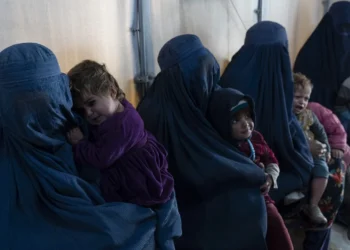
A group of women in burqas walk through Herat amid worsening economic hardships and concerns over meeting basic needs. (Photo credit: AFP)
Afghanistan News

Herat’s Impoverished Families: ‘We Can No Longer Meet Our Basic Needs’

3 October 2026 [t_time:1791049543]
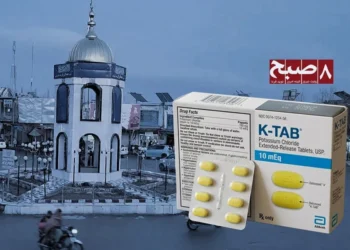
A composite image shows a K-Tab medicine package over a public square in Uruzgan as residents voice concern over rising drug use among youth. (Photo credit: 8a.media + AI)
Daily Reports

A Silent Threat: How Youth in Uruzgan Are Falling into the Trap of “Tablet K”

3 October 2026 [t_time:1791023574]
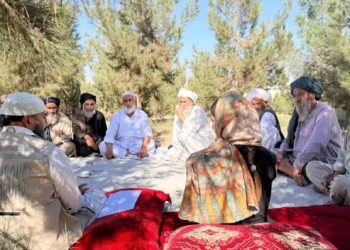
Elders sitting and talking outside (Photo: OCHA)
Afghanistan News

OCHA: Poverty and Unemployment Among Main Concerns of Helmand Residents

1 October 2026 [t_time:1790849062]

Latest

Loading latest news...

Popular stories

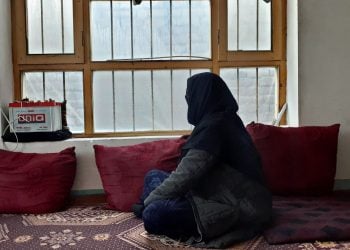
  • An Afghan woman gazes out of her home, reflecting the isolation and challenges faced by women in Afghanistan under Taliban rule. (Photo Credit: 8am.media)

    UN Report Reveals Shifts in Family Attitudes and Rise in Domestic Violence in Afghanistan

    Share
    Share Tweet
  • Taliban Intelligence Deputy in Faizabad Killed with Two Guards

    Share
    Share Tweet
  • Iraq Reports Export of Two Million Barrels of Crude Oil Through Strait of Hormuz

    Share
    Share Tweet
  • Al-Qaeda Releases Hamza bin Laden Message on 9/11 Anniversary

    Share
    Share Tweet
  • Taliban Shoot Young Man from Herat After Torturing Him with Hands Tied

    Share
    Share Tweet

Podcast

Insights
Insights

Join Lynne O’Donnell for 8AM’s podcast series, Insights.
Lynne talks with generals, diplomats, soldiers, journalists, politicians, activists, people who have front row seats for conflicts around the world, and citizens with a story to tell, happy or sad. For this first series, Afghanistan is the focus. Lynne and her guests talk about the collapse of the republic in August, 2021, and the impact since — for the people of Afghanistan, for the security of the region, for the safety of the world. It’s important, interesting and insightful.

Insights/22: Controlling the Narrative with Mina Sharif
byinsights8am

Controlling the Narrative

Lynne O’Donnell talks with Mina Sharif, author, activist, women’s rights campaigner, educator and mentor. They discuss who controls the narrative and who speaks for Afghanistan’s people when the Taliban appear to have seized control not only of the country but of the message, too.

Have a listen

Insights/22: Controlling the Narrative with Mina Sharif
Episode play icon
Insights/22: Controlling the Narrative with Mina Sharif
Episode Description
Episode play icon
Insights/21: Media Meltdown with Zahra Joya
Episode Description
Episode play icon
Insights/20: Terror Inc with Scott Richards
Episode Description
Episode play icon
Insights/19: Busting Stereotypes with Bushra Gohar
Episode Description
Episode play icon
Insights/18: Media Matters with Waliullah Rahmani
Episode Description
Episode play icon
Insights/17: What Goes Around Comes Around with Sima Samar
Episode Description
Search Results placeholder
Hasht-e Subh

8AM Media, also known as Hasht-e-Subh Daily, stands as Afghanistan's premier independent and non-profit newspaper, resonating as a beacon of journalistic integrity since its establishment in June 2007 by esteemed Afghan journalists and human rights advocates. With a steadfast commitment to citizen journalism and civic education, Hasht-e-Subh Daily has earned its place as the most esteemed publication in the nation.

Publisher: Sanjar Sohail
Email: [email protected]
Executive Director: Parwiz Kawa
Email: [email protected]

Read More

Barred from School, Now Teaching: The Story of Behdukht Online Academy on Teacher’s Day

When Colonialism Redesigned Religion

UNICEF Announces Expanded Primary Healthcare Services for Children and Mothers in Afghanistan

Residents Fund Construction of Health Center in Ghazni

Faiq at UN Calls for End to Arbitrary Detentions, Torture and Killings in Afghanistan

Editor’s Choice

Every Saturday morning, 8AM MEDIA English Services Department will guide you through the week’s biggest stories from Afghanistan and the international community.

Subscribe

© 2026 - ©Hasht-e Subh Daily

No Result
View All Result
8am.Media
پښتو ویب‌پاڼه
ویب‌سایت فارسی
اۉزبېکچه ویب‌سایت
  • Home
  • News
    • Afghanistan News
    • World News
  • Opinion
    • Editorial
    • Analysis
  • Reports
    • Daily Reports
    • Investigative Reports
  • Society
    • The story of people
  • Women’s Word
  • Columns
    • Three Years After Afghanistan’s Fall: The Taliban’s Resurgence
    • Towards Equality
    • The Resurgence of the Taliban: Two Years Since Afghanistan’s Fall
    • Hebatullah Report Special Edition
    • Resistance for Education Special Edition
    • Special Column on Taliban’s Education Curriculum
    • Nawroz
  • Interviews
  • Contact Us
    • About Us
    • 8AM MEDIA Annual Awards
    • Submit an Article to Hasht-e-Subh
  • 8am.media

© 2026 - ©Hasht-e Subh Daily