
Several cultural figures and residents of Ghazni province have launched a campaign on social media, urging the halt of construction for a large vegetable market in the area of ancient monuments near the province’s historical minarets.
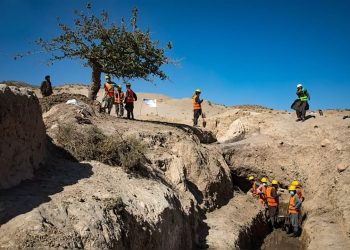
Residents accuse the Taliban of neglecting the preservation of the province’s cultural and historical heritage. They assert that the Taliban’s Ministry of Defense has designated parts of the land in these ancient areas as its property and has contracted at least 300 hectares of this land to a close associate for the construction of the vegetable market. They report that construction and excavation work has already commenced.
Meanwhile, some Ghazni cultural figures residing abroad have initiated a campaign to prevent construction in the historical monument’s vicinity. They are calling on the Taliban, particularly the group’s Ministry of Information and Culture, to avoid ideological treatment of the province’s historical identity and to stop construction in the area immediately.
Yahya Erfan, the former Head of the Directorate of Information and Culture in Ghazni, criticized the construction and occupation of Ghazni’s ancient sites. On his Facebook page, he wrote: “Ghazni is an ancient city that has housed multiple civilizations, with significant remains of two major ancient-historical civilizations, the Kushans and the Ghaznavids, still present. This city is regarded as one of the four most important centers of civilization in the Islamic world and is known as the ‘Bride of Cities,’ the ‘City of Saints,’ and the home of Sanai.”
Recalling Ghazni’s designation as the Capital of Islamic Culture and Civilization in 2013, Erfan added: “Since the Taliban came to power, the seizure, destruction, and occupation of ancient sites in this civilizational hub have intensified unprecedentedly, with Taliban individuals and government institutions seizing and occupying over hundreds of hectares of land in the Shah Bahar plain (the minaret area). This area, which spans about 700 hectares, is considered one of the most important locations of Ghaznavid civilization, with the Sardar Hill, a remnant of the Kushan era, situated nearby.”
The former Head of the Directorate of Information and Culture of Ghazni noted that the previous government had planned to enclose and preserve this area as a protected archaeological park, but various issues left the work unfinished. He stated: “The plan was to preserve this area as a ‘protected archaeological park’ and to build a surrounding wall measuring 6,000 meters. The project, which began with a budget exceeding 3 million Afghanis, had achieved about 40% progress. Unfortunately, due to interference from some government departments and land mafias, this project was never completed, leaving the area without a protective fence.”
Nasir Ahmad Taraki, another cultural figure from the province currently living abroad, criticized the Taliban’s construction of the vegetable market in the historical Shah Bahar area. He claimed that the Taliban, by fostering an atmosphere of fear and intimidation, have silenced the voices of the people, stripping them of the right to criticize and express their opinions while destroying the country’s cultural and civilizational heritage. He urged the province’s residents to act without delay and utilize popular movements to halt construction in this area.
In a video shared on social media, Taraki expressed his concerns about the plundering of the province’s cultural and historical heritage: “After the Taliban returned to power, in addition to the loss of all the people’s hopes, our history is also being plundered. The construction of this market in the province’s historical area is, in fact, a dagger to the heart of Ghaznavid civilization.”
This Ghazni resident described the choice of a vegetable market in this ancient area as a deliberate effort to erase the signs of a great civilization. He added: “The selection of this area is intentional, and the planners have no other thought than enmity with the culture and civilization of this province. Additionally, the excavation and looting of potential historical relics from underground is another part of the planners’ agenda to build a fruit and vegetable market in this area.”
However, reliable sources in Ghazni confirmed to the Hasht-e Subh Daily that the Taliban began constructing a large vegetable market inside the protected area, behind the enclosing wall on the eastern side of the ancient area near the Kabul-Kandahar highway, some time ago.
On the other hand, sources in the province confirmed that the Ministry of Defense had already claimed ownership of this area, but the previous government rejected this claim based on the Law on the Protection of Historical Monuments, emphasizing the preservation of this region.
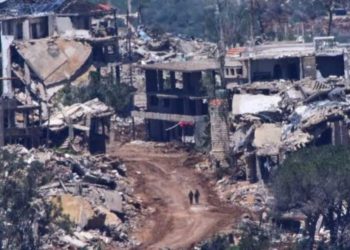
The Taliban regime, particularly officials from the group’s Ministry of Information and Culture, has yet to comment on the constructions in Ghazni’s ancient sites. Meanwhile, not only has the historical minaret area of Ghazni suffered from plunder and destruction, but since the Taliban took control of the country, the historic Bala Hissar in this province has also faced complete destruction, leaving nothing but a pile of dirt.
You can read the Persian version of this daily report here:
غزنی در آستانه فاجعه فرهنگی؛ در ساحه آبدات تاریخی «بازار سبزی» ایجاد میشود | روزنامه ۸صبح