• 8AM.MEDIA
  • ویب‌سایت فارسی
  • پښتو ویب‌پاڼه
  • اۉزبېکچه ویب‌سایت
  • Podcast
Thursday, September 24, 2026
Hasht-e Subh
  • Home
  • News
    • Afghanistan News
    • World News
  • Opinion
    • Editorial
    • Analysis
  • Reports
    • Daily Reports
    • Investigative Reports
  • Society
    • The story of people
  • Women’s Word
  • Columns
    • Three Years After Afghanistan’s Fall: The Taliban’s Resurgence
    • Towards Equality
    • The Resurgence of the Taliban: Two Years Since Afghanistan’s Fall
    • Hebatullah Report Special Edition
    • Resistance for Education Special Edition
    • Special Column on Taliban’s Education Curriculum
    • Nawroz
  • Interviews
  • Contact Us
    • About Us
    • 8AM MEDIA Annual Awards
    • Submit an Article to Hasht-e-Subh
  • 8am.mediaBack
Subscribe
No Result
View All Result
  • Home
  • News
    • Afghanistan News
    • World News
  • Opinion
    • Editorial
    • Analysis
  • Reports
    • Daily Reports
    • Investigative Reports
  • Society
    • The story of people
  • Women’s Word
  • Columns
    • Three Years After Afghanistan’s Fall: The Taliban’s Resurgence
    • Towards Equality
    • The Resurgence of the Taliban: Two Years Since Afghanistan’s Fall
    • Hebatullah Report Special Edition
    • Resistance for Education Special Edition
    • Special Column on Taliban’s Education Curriculum
    • Nawroz
  • Interviews
  • Contact Us
    • About Us
    • 8AM MEDIA Annual Awards
    • Submit an Article to Hasht-e-Subh
  • 8am.mediaBack
No Result
View All Result
Hasht-e Subh
No Result
View All Result

Israel’s Strike on Iran: What Happens Now?

Kiomars Samadi Kiomars Samadi
14 June 2025 - Solar Hijri Date: 1404/03/24 [t_time:1749910755]
An Iranian protester waves the national flag as riot police form a barricade during a night demonstration amid rising regional tensions. (Photo Credit: AFP)

AFP

In a surprise attack on Iranian territory, Israel assassinated several high-ranking military officials of the Islamic Republic. It inflicted significant damage on some of the country’s military and nuclear facilities. An operation of this scale and intensity is unprecedented and likely beyond what the Islamic Republic had anticipated, especially at a time when the door to negotiations with the United States remains ajar, and there is still hope for a successful diplomatic outcome.

The first question that arises is: Why did Israel suddenly launch a military offensive?

Several points are worth considering:

1) Israeli Prime Minister Benjamin Netanyahu has recently found himself in a precarious position. In addition to mounting international diplomatic pressure and sanctions imposed by Western governments on key members of his cabinet, he is grappling with severe domestic turmoil. Among the most pressing challenges is a vote in the Knesset (Israel’s parliament) aimed at dissolving the current government and holding early elections. Although Netanyahu survived a recent no-confidence vote, the threat has not been entirely neutralized. Against this backdrop, Netanyahu had every incentive to create a major external distraction. An attack on Iran provided an ideal opportunity. When it comes to confronting the Islamic Republic, Israeli political factions—whether left, right, or centrist—often put aside their differences and unite against a common enemy. Thus, a military strike on Iran allowed Netanyahu to shift public focus from internal political strife to external security threats.

2) The ongoing humanitarian catastrophe in Gaza has become a political liability not only for Netanyahu but also for the international community. The situation has deteriorated to such an extent that even some European nations have expressed outrage at Israel’s actions. For Netanyahu, diverting global attention away from the famine in Gaza required a bold move—hence the strike on Iran. Why Iran? Because the Islamic Republic’s anti-Western posture often isolates it internationally. In times of crisis, most countries not only withhold sympathy from Tehran but, behind closed doors, actively work to further weaken it. Netanyahu’s tactic is not new. When the Gaza war erupted, global public opinion in the West gradually began to favor the Palestinians. Streets in many Western capitals were filled with demonstrators calling for an end to the war. To reverse this narrative, Netanyahu ordered a strike on Iran’s consulate in Damascus. In response, the Islamic Republic launched an operation dubbed “True Promise 1“, which swung the pendulum back in Israel’s favor. Western governments quickly rallied behind Tel Aviv, and public protests in support of Palestinians began to subside.

3) U.S. President Donald Trump, despite his earlier optimistic tone, recently expressed skepticism about the prospects of a successful deal with Iran. He admitted that a clear outcome was increasingly unlikely. Meanwhile, a new report from the International Atomic Energy Agency (IAEA) accused Iran of violating its nuclear commitments—an allegation that Israel welcomed. Adding to the momentum, the European troika (France, Germany, and the UK) adopted a hardline stance against Tehran, and the IAEA Board of Governors passed a resolution condemning Iran. These developments effectively sharpened Netanyahu’s axe and gave him the political leverage he needed to act. When Trump shows signs of giving up on diplomacy, the European powers align against Iran, and the IAEA casts doubt on the peaceful nature of Iran’s nuclear program, Netanyahu interprets this confluence of factors as a green light for military action.

4) It appears that Trump has granted Netanyahu a degree of tactical latitude, aiming to pressure Tehran into moderating its position during negotiations and yielding to Israeli and American demands. What reinforces this interpretation are Trump’s remarks following the Israeli strike, in which he lauded the operation, implicitly signaling approval.

What Comes Next?

Iran, it seems, had little choice but to launch a retaliatory strike, a move that appears more aligned with restoring deterrence and recalibrating Israel’s calculations than signaling an intent to enter a full-scale, protracted war. Like the previous “True Promise I” and “True Promise II” operations, this strike appears aimed at reclaiming lost credibility rather than escalating into all-out conflict. What happens next largely depends on the scale and effectiveness of Iran’s counterattack, which, as of now, remains unclear. Israeli officials have yet to offer a definitive assessment of the Islamic Republic’s response. Should the strike significantly impact Israeli perceptions and strategic calculations—or if the U.S. and Israel come to recognize that Iran retains a substantial capacity for follow-up attacks and may not easily back down—the possibility of de-escalation increases. Under such circumstances, a pathway toward ending hostilities may emerge, possibly even leading to a resumption of U.S.–Iran negotiations. If that happens, Washington may find itself compelled to offer limited concessions at the negotiating table to bring the conflict to a close.

Conversely, if the U.S. and Israel determine that Iran has suffered extensive damage and lacks the effective tools to launch a credible deterrent strike, they are likely to double down on pressure. In that scenario, Tehran may be left with no option but to acquiesce to the core demands of the White House, such as completely dismantling its uranium enrichment program and possibly even shuttering its nuclear infrastructure altogether—in a bid to persuade Washington to restrain Israel. Should the Islamic Republic conclude that it cannot endure a prolonged confrontation with Israel and the United States, it may choose to retreat in a way that does not appear, to an impartial observer, as outright capitulation. While Iranian officials often cloak their rhetoric in ideological and revolutionary slogans, history suggests that when confronted with their strategic vulnerabilities, they tend to adopt pragmatic approaches at critical junctures to avert existential threats.


You can read the Persian version of this analysis here:
حمله اسراییل بر ایران؛ حالا چه خواهد شد؟

ShareTweetSendSendShare

Related Posts

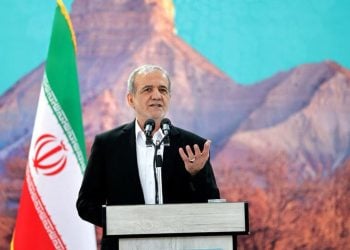
Iranian President Masoud Pezeshkian speaks at a podium with the Iranian flag behind him, marking the first anniversary of the 12-day war against Iran. (Photo credit: REUTERS)
World News

Pezeshkian: 12-Day War Proved Iran Is a United Nation

13 June 2026 [t_time:1781372257]
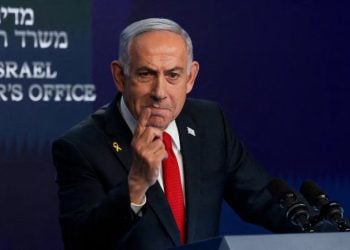
Israeli Prime Minister Benjamin Netanyahu speaks at a press conference at the Prime Minister's Office in Jerusalem. (Photo Credit: REUTERS)
World News

Netanyahu: The US-Israel War Against Iran Is Not Over

3 June 2026 [t_time:1780505077]
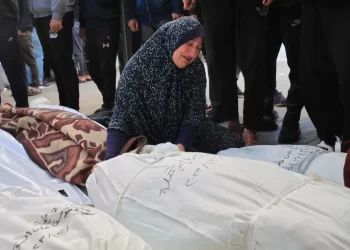
A Palestinian woman weeps over the shrouded bodies of her loved ones killed in Israeli strikes on Gaza, as the war's death toll surpasses 72,000. (Photo Credit: AFP)
World News

Gaza War Death Toll Surpasses 72,000 as Attacks Continue Despite Ceasefire

31 May 2026 [t_time:1780243191]

Latest

Loading latest news...

Popular stories

  • Hamza bin Laden - the son of Osama bin Laden (Photo: Social Media)

    Al-Qaeda Releases Hamza bin Laden Message on 9/11 Anniversary

    Share
    Share Tweet
  • UN Report Reveals Shifts in Family Attitudes and Rise in Domestic Violence in Afghanistan

    Share
    Share Tweet
  • Pakistani Army Says Five Killed Over Alleged Links to Terrorism

    Share
    Share Tweet
  • Asian University for Women: Protesting Students Face Expulsion

    Share
    Share Tweet
  • U.S. Defense Secretary Calls Washington Post Worse Than Iranian State Media

    Share
    Share Tweet

Podcast

Insights
Insights

Join Lynne O’Donnell for 8AM’s podcast series, Insights.
Lynne talks with generals, diplomats, soldiers, journalists, politicians, activists, people who have front row seats for conflicts around the world, and citizens with a story to tell, happy or sad. For this first series, Afghanistan is the focus. Lynne and her guests talk about the collapse of the republic in August, 2021, and the impact since — for the people of Afghanistan, for the security of the region, for the safety of the world. It’s important, interesting and insightful.

Insights/22: Controlling the Narrative with Mina Sharif
byinsights8am

Controlling the Narrative

Lynne O’Donnell talks with Mina Sharif, author, activist, women’s rights campaigner, educator and mentor. They discuss who controls the narrative and who speaks for Afghanistan’s people when the Taliban appear to have seized control not only of the country but of the message, too.

Have a listen

Insights/22: Controlling the Narrative with Mina Sharif
Episode play icon
Insights/22: Controlling the Narrative with Mina Sharif
Episode Description
Episode play icon
Insights/21: Media Meltdown with Zahra Joya
Episode Description
Episode play icon
Insights/20: Terror Inc with Scott Richards
Episode Description
Episode play icon
Insights/19: Busting Stereotypes with Bushra Gohar
Episode Description
Episode play icon
Insights/18: Media Matters with Waliullah Rahmani
Episode Description
Episode play icon
Insights/17: What Goes Around Comes Around with Sima Samar
Episode Description
Search Results placeholder
Hasht-e Subh

8AM Media, also known as Hasht-e-Subh Daily, stands as Afghanistan's premier independent and non-profit newspaper, resonating as a beacon of journalistic integrity since its establishment in June 2007 by esteemed Afghan journalists and human rights advocates. With a steadfast commitment to citizen journalism and civic education, Hasht-e-Subh Daily has earned its place as the most esteemed publication in the nation.

Publisher: Sanjar Sohail
Email: [email protected]
Executive Director: Parwiz Kawa
Email: [email protected]

Read More

A Memory from My School Days

Qatar’s Minister of State for International Cooperation Meets UNAMA Chief

Turkmen National Language Day Commemorated in Jawzjan and Faryab

One Killed After Russian Tourists’ Convoy Vehicle Collides with Motorcycle in Badakhshan

Mysterious Killings Increase; Money Changer Killed in Ghazni

Editor’s Choice

Every Saturday morning, 8AM MEDIA English Services Department will guide you through the week’s biggest stories from Afghanistan and the international community.

Subscribe

© 2026 - ©Hasht-e Subh Daily

No Result
View All Result
8am.Media
پښتو ویب‌پاڼه
ویب‌سایت فارسی
اۉزبېکچه ویب‌سایت
  • Home
  • News
    • Afghanistan News
    • World News
  • Opinion
    • Editorial
    • Analysis
  • Reports
    • Daily Reports
    • Investigative Reports
  • Society
    • The story of people
  • Women’s Word
  • Columns
    • Three Years After Afghanistan’s Fall: The Taliban’s Resurgence
    • Towards Equality
    • The Resurgence of the Taliban: Two Years Since Afghanistan’s Fall
    • Hebatullah Report Special Edition
    • Resistance for Education Special Edition
    • Special Column on Taliban’s Education Curriculum
    • Nawroz
  • Interviews
  • Contact Us
    • About Us
    • 8AM MEDIA Annual Awards
    • Submit an Article to Hasht-e-Subh
  • 8am.media

© 2026 - ©Hasht-e Subh Daily