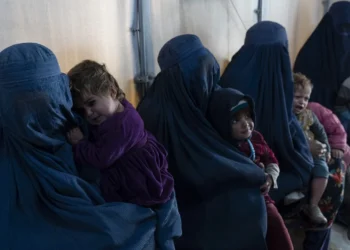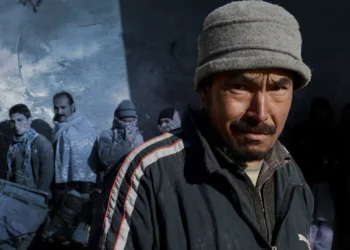

Several residents of Kabul complain about rising unemployment and say that even securing a single daily meal has become extremely difficult for them. According to them, job opportunities in Kabul have sharply declined, and people of all ages, from young individuals to the elderly, are struggling with unemployment. These residents emphasize that their minimal daily income is insufficient to meet basic living needs, and they are unable to cover essential household expenses, including food and rent. Meanwhile, some economic experts consider the decline in investment, reduction in foreign aid, population growth in Kabul, and the ban on women’s employment as the main factors behind the increase in unemployment in the city.
Following concerns over rising unemployment in the country, particularly in Kabul, several residents of the city have expressed complaints about the continuation of the current situation. They say that widespread unemployment has created serious concerns, and for many residents of the capital, even securing one meal a day has become a distant hope.
Yousef Hakimi, a resident of Kabul, complains about his difficult economic situation and says that even providing one meal for his family has become a major challenge. He adds that he earns no more than 100 Afghanis per day and constantly worries about which of his basic needs he should address with such a small amount. According to him, rising food prices and the lack of job opportunities have made life extremely difficult for him and his family.
This Kabul resident says: “There is no work. I cannot earn more than 100 Afghanis a day. I am left confused about how to cover my family’s expenses with this small amount of money, whether to pay the house rent or the electricity bill. I can barely provide even one meal for my family. Unfortunately, we cannot live; we only survive.”
Zarghona, another resident of Kabul, shares a similar account to Yousef. She says that her husband is ill and, due to the Taliban’s restrictions, she lost her job and now sells tissue paper along the road as a handcart vendor.
This Kabul resident, who struggles to decide how to address her family’s problems with her limited income, says: ‘My husband is ill. We are a family of eight and pay 4,000 Afghanis in monthly rent. Previously, I worked, and our situation was relatively better, but after women’s work was banned, I lost my job. Wherever I went looking for work, no one hired me due to these restrictions. Now I earn a living as a handcart vendor, selling tissues and plastic water containers, and I only make about 150 to 200 Afghanis a day. With this small income, I truly do not know whether to pay the rent or feed my children. We have become extremely exhausted and helpless in this situation.
At the same time, Shaker Yaqoubi, an economic expert, says that the decline in investment and foreign aid, population growth in Kabul, and the ban on women’s employment are among the main factors behind rising unemployment in the city.
Mr. Yaqoubi says, “Unemployment in Kabul has not emerged suddenly. The decline in investment and foreign aid, the halt of projects, and the simultaneous arrival of thousands of people from the provinces to Kabul have led to an increase in unemployment. When job opportunities for women are restricted, and practical skills among the youth are low, this problem multiplies. Job opportunities must be provided for people, small businesses should be supported, domestic production should be increased, and the work environment must be opened to everyone, especially women.”
This comes as, following the Taliban’s return to power in Afghanistan, many private institutions have halted their operations due to economic challenges.
The United Nations had previously announced that Afghanistan’s economy in 2025 would be highly fragile. According to the organization’s report, the unemployment rate has reached 75 percent, and poverty has affected more than 90 percent of the population, while over 70 percent of people have depended on humanitarian assistance.
The World Bank also previously stated in a report that one out of every four young people in Afghanistan is unemployed. The institution emphasizes that despite relative economic growth in 2024 and 2025, unemployment and poverty remain widespread.
You can read the Persian version of this report here:
سایه سنگین بیکاری بر کابل؛ تامین یک وعده غذایی به آرزو تبدیل شده است