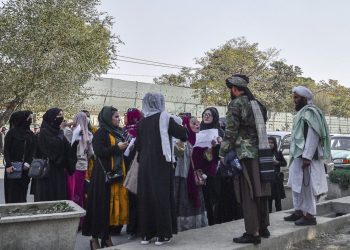
After the Taliban’s takeover of Afghanistan, they imposed widespread restrictions on the cultural and historical ceremonies of the people. As part of these bans, they also prohibited the celebration of cultural ceremonies and ancient festivals, including Shab-e Yalda, also known as Chelle Night. However, many citizens, especially women and girls, have continued to observe this night as a symbol of the history, culture, and long-standing traditions of the people. They lit candles and set up colorful Yalda tables, celebrating Yalda as a symbol of the victory of light over darkness. Various women’s protest groups held cultural events in enclosed spaces to protest the Taliban’s discriminatory policies against women and their anti-cultural stance. These protesters honored Yalda as a symbol of the resilience of light against darkness, emphasizing that, in addition to depriving women of all spheres of life, the Taliban have suppressed cultural ceremonies and systematically violated citizens’ cultural rights and freedoms.
The Golden Needle Literary Association, in a statement, declared that under the Taliban’s control, the social, economic, political, and cultural lives of women have been completely destroyed. The association added that during the Taliban’s three-year rule, gender apartheid has emerged, and Afghanistan has become a male-dominated country. They pointed out that many aspirations have been shattered and the future under the Taliban’s rule appears entirely dark and unclear for both women and men in Afghanistan.
Members of this literary association, wearing symbolic “Handmaid” clothing, expressed their dissatisfaction with the Taliban’s ideology and actions inside the country. They stated that under the Taliban’s misogynistic thinking, speech, and actions, the lives of Afghan girls have been reduced to “becoming handmaids” and “remaining as handmaids.”
The association’s message reads: “In these years, protests by women inside Afghanistan have been suppressed through arrest, torture, and rape by the Taliban, and external protests have failed to bring any change. The oppression caused by the Taliban’s actions has left Afghan women hopeless, but despair has never diminished their activity and protests against the Taliban’s imposed conditions.”
The Purple Saturdays Movement, in a statement, declared that the ban on cultural celebrations would destroy cultural heritage, disrupt the transmission of customs and cultural symbols to future generations, eliminate cultural diversity, and ideologically homogenize Afghan society. Members of this movement celebrated Shab-e Yalda with their friends and depicted the special events of the night.
The “Independent Coalition of Afghanistan Women’s Protest Movements” also wrote in a message: “Shab-e Yalda is a symbol of connection, friendship, and unity for many of us, but for Afghan women, these nights are more of a reminder of the injustices and oppressions imposed on their lives under various governments.” The members of this Coalition called for the annulment of the bans imposed by the Taliban against women and said: “On this Shab-e Yalda, instead of lighting candles, we burn in the hope of freedom, equality, and justice.”
The Free People Movement in Exile, commemorating Shab-e Yalda in Pakistan, stated that Afghan women will never surrender to darkness. Members of this movement described the Taliban as a “misogynistic, anti-cultural, and anti-human values group” and emphasized that they are committed to preserving the cultural values of their ancestors and celebrating their culture. These women also emphasized that they would not allow the “bright parts of culture and civilization” to be overshadowed by darkness and despair.
The Women’s Movement Towards Freedom celebrated Shab-e Yalda as “a commemoration of culture and protest against tyranny.” The movement wrote in a statement: “Today, in a land rich in ancient cultures, a group of narrow-minded individuals, under the guise of religion and the pretext of Sharia, has risen to extinguish the light of our culture and our true traditions. The Taliban, enemies of joy and beauty, call our Shab-e Yalda forbidden, as if honoring light and love is an enemy of God.”
In a message released by the members of this movement, it is stated that women will not allow any group to take away the cultural identity of the people with what they call “decayed thoughts.” According to them, the Taliban are enemies of humanity and, under the guise of “Sharia,” criminalize joy for the people. They condemned the Taliban’s attempts to restrict cultural practices and called on everyone to join the “cultural resistance” against this group and stand against the Taliban’s narrow-mindedness.
The Window of Hope Women’s Movement also commemorated Shab-e Yalda by reciting patriotic poems and revisiting the song “Bread, Work, Freedom.” Members of this movement, hoping for the victory of light over darkness, called for the realization of human rights, especially women’s rights, in Afghanistan.
Afghanistan’s Women Resistance Society also sent messages and video tapes to the media, announcing that they had celebrated Shab-e Yalda. The message of this society reads: “Members of Afghanistan’s Women Resistance Society celebrated Shab-e Yalda in a gathering in Kabul. This night, the longest night of the year, holds meaning beyond a cultural tradition for us Afghan women; Yalda is a symbol of resistance and hope, a symbol of the truth that no darkness is everlasting.”
Members of this society have called on the international community to stand by Afghan women and not support the imposition of darkness on Afghanistan. They emphasized that the Taliban’s defeat is near, and women are fighting for justice and freedom.
Additionally, members of the Unity and Solidarity of Afghanistan Movements, Afghanistan’s Powerful Women’s Movement, and other protesting women and girls have celebrated Shab-e Yalda with text and image messages. They celebrated this night with the wish for the freedom and liberation of Afghanistan from the grip of darkness.
Meanwhile, Parwana Ibrahimkhail Nijrabi, one of the protesting girls, told the Hasht-e Subh Daily: “Shab-e Yalda, the longest night of the year, teaches us that no night lasts forever. I believe that the dark days and the shadow of darkness over the lives of the daughters of our homeland will soon lead to the rise of the sun. To witness that sunrise, we must stand firm and fight.”
In addition to the protesting women and girls, several women politicians and women who held key positions in the previous government over the past 20 years have also celebrated Shab-e Yalda with congratulatory messages on social media, emphasizing the resilience of women against the Taliban’s discriminatory policies.
While women are widely celebrating Shab-e Yalda as a symbol of cultural resistance, the Taliban have banned the celebration of this night. The group has stated that celebrating Shab-e Yalda is “forbidden and sinful from the perspective of Islamic law.”
You can read the Persian version of this daily report here:
یلدا و ایستادهگی زنان؛ جنبشهای اعتراضی بهطور گسترده شب یلدا را تجلیل کردند